
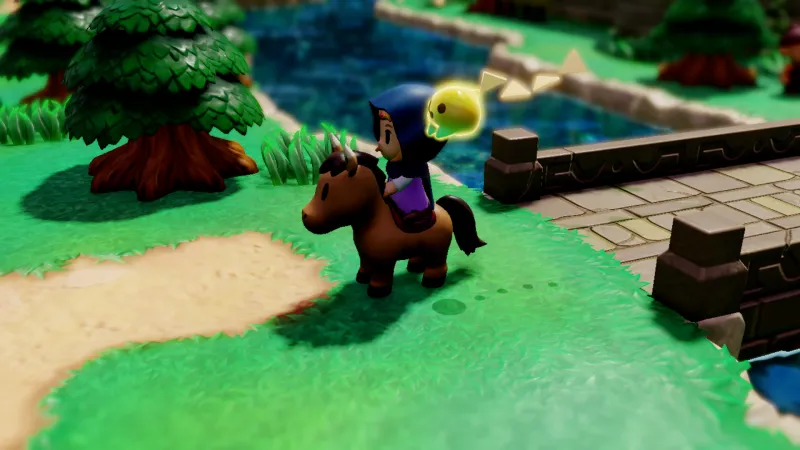
For the first time since the franchise’s 1986 debut, Princess Zelda finally takes center stage as the playable protagonist in The Legend of Zelda: Echoes of Wisdom. Released as a core series entry rather than a spin-off, the game delivers a traditional dungeon-and-puzzle experience that attempts to modernize the classic formula. While it captures the spirit of Hyrule, the adventure ultimately struggles with inconsistent mechanics and a loss of momentum as it nears its conclusion.
The Echo Mechanic: Innovation or Repetition?
The game’s standout feature is Zelda’s ability to “echo” objects and enemies, essentially cloning them to solve puzzles and navigate the environment. This system replaces traditional gear, allowing for creative problem-solving—such as utilizing flying bats to bridge gaps or spawning objects to reach high ground. Early on, this collection-based gameplay feels fresh and rewarding.
However, the novelty wears thin by the halfway point. Players often fall into the trap of relying on a select few “go-to” echoes to bypass challenges, rendering the vast catalog of items redundant. This design choice impacts dungeon variety, as many puzzles begin to feel repetitive rather than revelatory, often boiling down to using the same specific assets to progress.
Combat and The Swordfighter Form
Combat in Echoes of Wisdom lacks the visceral impact expected from the series. Relying on summoned minions to fight on your behalf rarely provides a thrill. While Zelda can temporarily transform into a “Swordfighter” form to channel Link’s abilities, it feels more like an emergency escape hatch during tedious encounters rather than a core, satisfying mechanic. Fortunately, boss battles offer enough tactical variety to keep these confrontations engaging.
A Charming World and Presentation
Despite mechanical shortcomings, the game’s presentation is stellar. Utilizing the art style established in the 2019 Link’s Awakening remake, Hyrule is rendered with immense charm and personality. The soundtrack is a highlight, featuring one of the most memorable overworld themes in series history. Furthermore, the narrative moves quickly, avoiding the trap of overstaying its welcome with its initial plot twist.
Exploration and the Mid-Ground Struggle
The open-ended nature of the world is a major strength. Unlike previous 2D entries that often felt constricted, Echoes of Wisdom encourages players to explore freely, rewarding curiosity with access to previously unreachable locations. The game clearly aims to bridge the gap between the rigid linearity of classic 2D Zelda and the experimental freedom of Breath of the Wild.
While this middle ground is ambitious, the final result feels pulled in two directions, never fully committing to either the satisfaction of a defined puzzle or the chaos of total experimentation. Despite these identity struggles, the game succeeds in its most important mission: providing a high-quality, authentic Zelda adventure where the Princess is finally the one saving the day.