
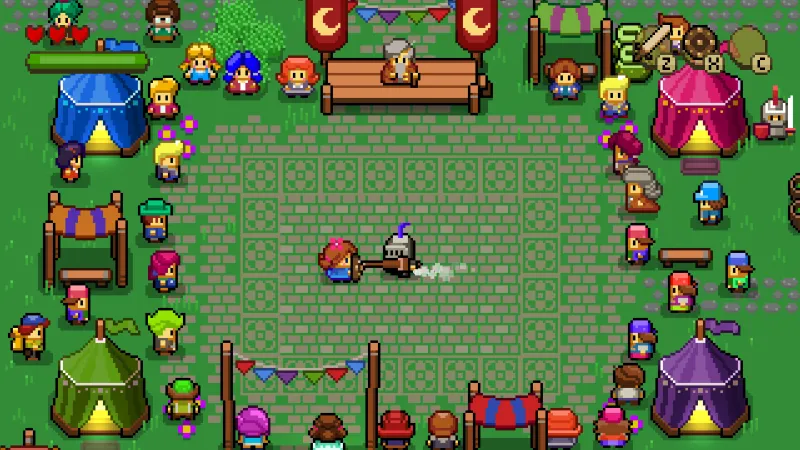
Blossom Tales II: The Minotaur Prince is a nostalgic, top-down action adventure that masterfully channels the spirit of 16-bit classics like The Legend of Zelda: A Link to the Past, offering a polished, retro-inspired journey that proves traditional design still holds significant appeal.
An Adventure Rooted in Classic Traditions
Modern homages often fall into two camps: rigid adherence to old conventions or bold, innovative expansion. Blossom Tales II firmly chooses the former. Much like its 2017 predecessor, it follows the proven “Zelda blueprint” closely. While it breaks little new ground, it successfully captures the magic of its influences to deliver a genuinely fun, retro-facing experience.
A Hero’s Journey Through Diverse Biomes
The story kicks off when Lily accidentally releases the Minotaur King, leading to the swift kidnapping of her brother. To save him, Lily must venture far beyond the safety of Blossomdale. The game takes players through a variety of well-realized locations, including pirate-infested swamplands, eerie haunted mansions, and treacherous deserts. The world design is intuitive, guiding players naturally from one screen to the next without the frustration of getting lost.
The Reward System: A Minor Hiccup
While the exploration is engaging, the incentives for thoroughness feel lackluster. Many challenging optional caverns yield only gold coins, which quickly become redundant due to an excess of currency. Heart pieces, while rewarding, are sparse enough that they fail to provide a consistent sense of progression. Despite this, the core loop of exploring every corner, bombing cracked walls, and fishing in every pond remains strangely addictive.
Dungeon Mastery and Puzzle Design
The series continues to excel in its dungeon design. Each labyrinth flows logically, providing just enough environmental clues to keep momentum high without resorting to hand-holding. One late-game dungeon stands out as a highlight, perfectly balancing intense combat encounters with clever environmental puzzles involving minecart tracks and shifting water levels.
Combat, Items, and Inventory Management
The combat in Blossom Tales II is straightforward and lacks the mechanical depth of some modern top-down action titles. However, the game compensates with a creative arsenal of items. Beyond staples like bows and boomerangs, players gain access to a yo-yo that functions like a hookshot and a guitar capable of playing spell-inducing melodies. While these tools make combat and exploration satisfying, the frequent need to pause and reassign items to the face buttons can occasionally disrupt the flow of the action.
Narrative Flavor and Unreliable Storytelling
The game employs a unique framing device: the story is being told by a grandfather to his grandchildren, Lily and Chrys, who act as the protagonists. Occasionally, the children interrupt or argue over the direction of the tale, allowing the player to make minor choices about enemies or puzzles. While this storytelling mechanic adds charm, it is unfortunately underutilized and mostly relegated to inconsequential decisions.
A Worthy Successor to the Original
Blossom Tales II wears its influences on its sleeve, and while it doesn’t quite reach the legendary status of the Nintendo titles that inspired it, it successfully modernizes early-90s design conventions for a contemporary audience. It is a refined, accessible adventure that improves upon its predecessor in nearly every way, leaving the door open for future tales of Lily, Chrys, and their grandfather.