
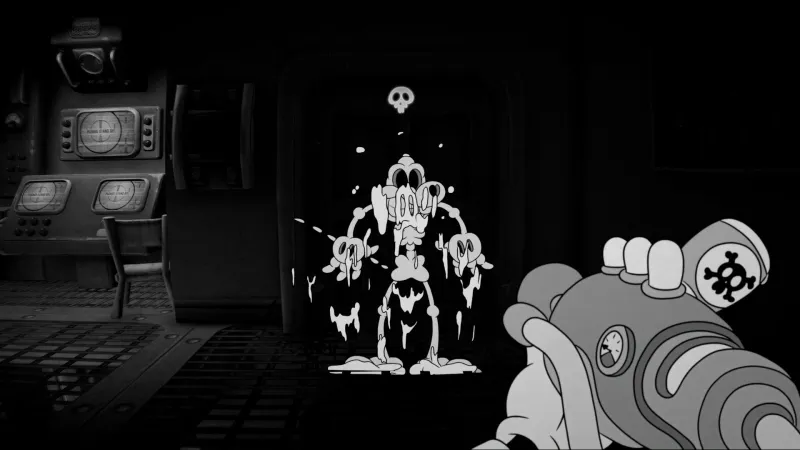
Mouse: P.I. For Hire delivers a stunning 1930s-inspired noir experience, blending black-and-white rubber hose animation with a rhythmic jazz soundtrack to bring the crime-ridden streets of Mouseburg to life. In this anthropomorphic adventure, players step into the shoes of Jack Pepper—voiced by industry veteran Troy Baker—as he navigates a labyrinthine missing persons case involving corrupt officials, cunning socialites, and desperate reporters. The sharp, witty writing keeps the narrative engaging across its dozen-hour runtime, masterfully subverting hardboiled detective tropes while maintaining a high-stakes mystery.
A Guided Investigation Rather Than a Detective Sim
While the game positions you as a private investigator, it prioritizes a cinematic journey over complex deduction mechanics. The experience is largely linear; Jack Pepper automatically organizes clues on his office board, and quest markers provide clear guidance on where to travel next. While those seeking a deep sleuthing simulator might miss the agency of solving puzzles personally, the game’s focus remains firmly on its stylish, fast-paced action and the constant discovery of visually distinct environments.
A Sincere Tribute to Classic Animation
The levels in Mouse are a masterclass in environmental storytelling, ranging from grand opera houses to eerie swamps. Each location is packed with slapstick humor, such as a derby-hat-wearing spider brandishing cutlery at its prey or enemies dissolving into comedic piles of ash upon defeat. Rather than feeling like a hollow parody, the game serves as a heartfelt homage to century-old animation styles like Steamboat Willie, seamlessly integrating these classic aesthetics with more mature, gritty themes.
Exploration, Secrets, and Side Quests
Navigation is consistently rewarding, bolstered by unlockable traversal abilities that encourage thorough exploration. Hunting for secret areas yields collectibles and side quest items that flesh out the relationships between Mouseburg’s eccentric citizens. Engaging with these optional tasks is highly recommended for the humorous dialogue alone. Furthermore, the game features a surprisingly addictive turn-based card game found at the downtown bar, which provides a strategic, time-consuming distraction from the main narrative.
Combat Mechanics and Boss Battles
While the gunplay and movement feel fluid and responsive, the combat encounters can become repetitive. Most enemies fall into predictable patterns—either mindless melee chargers or stationary gunmen—lacking the tactical variety found in the fast-paced shooters that clearly inspired the game, such as Doom. However, the boss battles effectively compensate for this lack of depth. These encounters are highlights of the experience, requiring players to utilize their full arsenal and skill set to overcome creative challenges, such as tracking elusive apparitions in a graveyard or timing precise cannon shots against mobile targets.
Final Verdict on Mouse: P.I. For Hire
Despite minor shortcomings in investigative mechanics and enemy variety, Mouse: P.I. For Hire succeeds through its undeniable charm. The combination of a stellar jazz score, captivating vintage visuals, and riotous cartoon antics creates an atmosphere that is difficult to replicate. It is a stylish, memorable adventure that proves to be well worth the investigation, even if it occasionally favors spectacle over mechanical complexity.