
Wanderstop, the latest title from the creators of The Stanley Parable and The Beginner’s Guide, delivers a surprisingly introspective look at personal drive and the struggle to find rest, even if the game’s technical performance occasionally falters.
An Unexpected Journey for a Former Warrior
The story follows Alta, a once-undefeated fighter who finds herself adrift after a series of crushing failures. While trekking through a forest to seek guidance from a master, she stumbles upon a mysterious tea shop. Though not technically a prisoner, Alta remains in the shop, desperately attempting to fill her time with tasks to regain her sense of purpose. This narrative of self-discovery is the heart of the experience, balancing sharp humor with a pervasive sense of melancholy that keeps the player invested in Alta’s growth.
Beyond the Typical Farming Sim
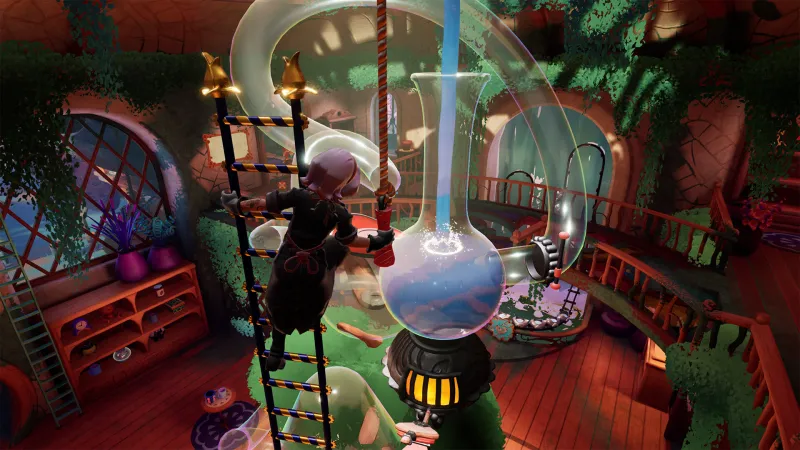
While the setting revolves around a tea shop, Wanderstop avoids the repetitive tropes of a standard farming simulator. Instead of tedious garden management, the game focuses on foraging and solving intuitive pattern puzzles to fulfill specific customer requests. This design choice makes every interaction feel intentional and unique. As the player learns to care about the customers’ specific needs, they witness Alta undergoing that same transformation, slowly trading her warrior’s intensity for the quiet rhythm of the shop.
Technical Hurdles vs. Narrative Strength
Despite its thematic brilliance, the game is not without flaws. The physical act of interacting with the tea machine and managing inventory can feel clunky. I encountered at least one game-breaking bug during my playthrough, which highlights the title’s technical shortcomings. However, the game’s primary strength lies in its writing; the narrative is so compelling that it effectively draws the player past these mechanical frustrations.
A Mirror for the Modern Player
The game’s brilliance is best captured in a moment of player-character synchronization. Early on, as an “action gamer” accustomed to constant objectives, I found myself repeatedly asking the shop owner, Boro, what I should do next. His response—a simple “whatever you want”—mirrored Alta’s own anxiety. It forced me to confront my own inability to slow down. Wanderstop uses the conventions of the medium to create a pensive and surprising experience that challenges how we approach relaxation.
The Verdict on Alta’s Growth
While Wanderstop does not rely on the fourth-wall-breaking antics of Ivy Roads’ previous hits, it succeeds as a poignant character study. Watching Alta learn to accept her limitations is a resonant experience that sticks with you long after the credits roll. It is a rare game that successfully encourages reflection on one’s own life, making it a journey well worth taking, regardless of whether you have an interest in virtual tea brewing.