
Titanium Court, the latest strategy title from developer AP Thompson, reinvents the match-three genre by blending chaotic puzzle mechanics with deep, shifting semiotics in a surreal, dreamlike kingdom. As the newly crowned queen, players must navigate a landscape where the definitions of objects—from octopuses to road signs—constantly evolve, forcing a strategic dance between pattern recognition and unconventional warfare.
Beyond the Standard Match-Three Formula
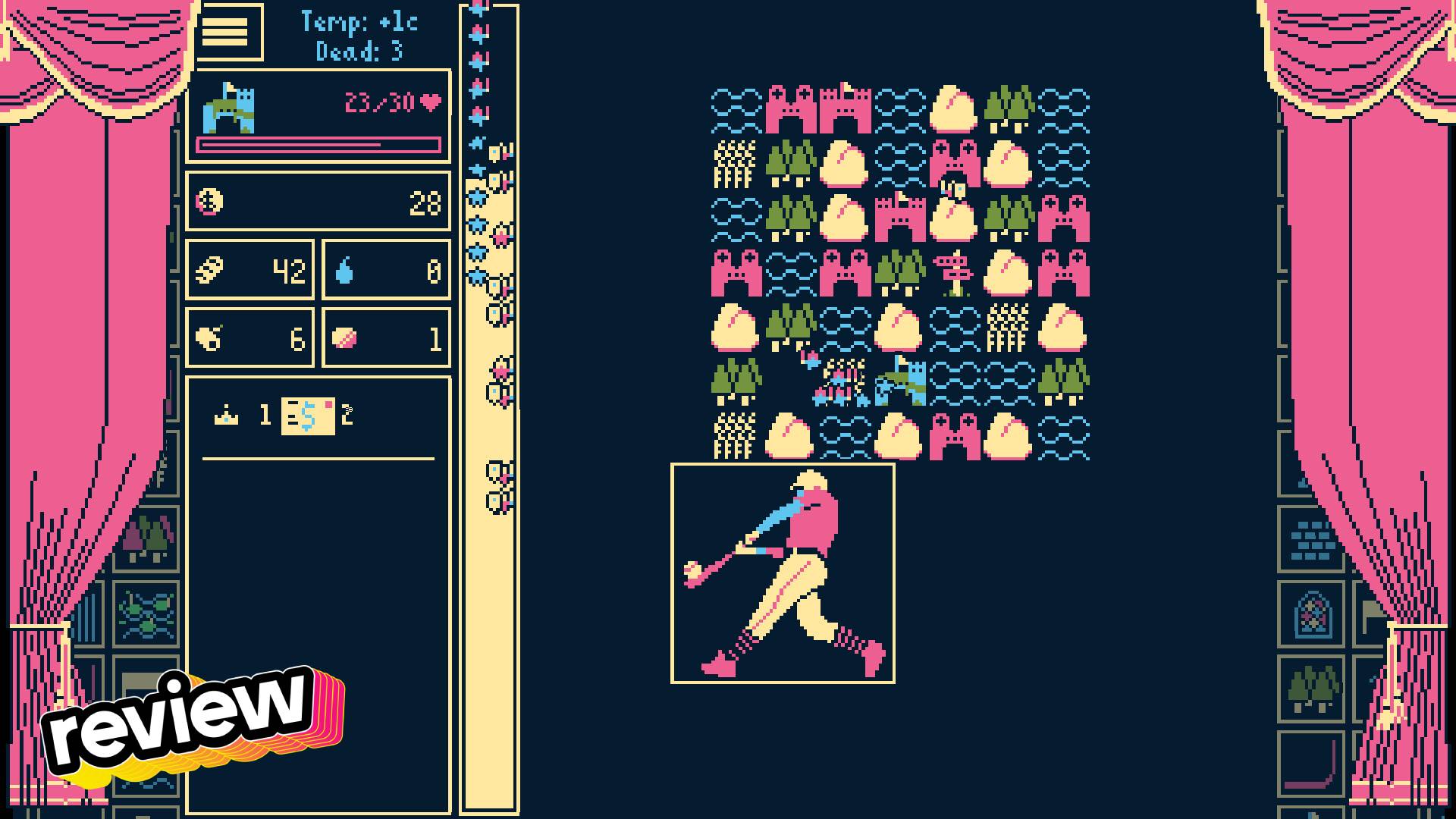
While match-three games are typically defined by their hypnotic consistency and accessibility, Titanium Court demands significant cognitive effort. The gameplay loop involves matching tiles to harvest resources like forests and mountains, which are then used to summon faerie units and cast spells. Players must destroy enemy structures to earn coins, all while managing a ticking clock that rewards combos with extra time. However, the game’s true complexity lies in its fluid nature: the status quo of the board is never guaranteed, as tiles and symbols reassign their functions based on the crown the player wears.

Strategic Chaos and Variable Crowns
The strategic depth of the game is dictated by the specific crown equipped during a run. A teenage arsonist crown might turn volcanoes into assets, while a celebrity crown leverages enemy proximity for bonuses. Players can even replicate enemy armies or manipulate wormholes to merge structures. This constant state of flux turns every session into an improvisational performance, where the “rules” of the battlefield are as ephemeral as the props in a cabaret.
A Narrative Wrapped in Mystery
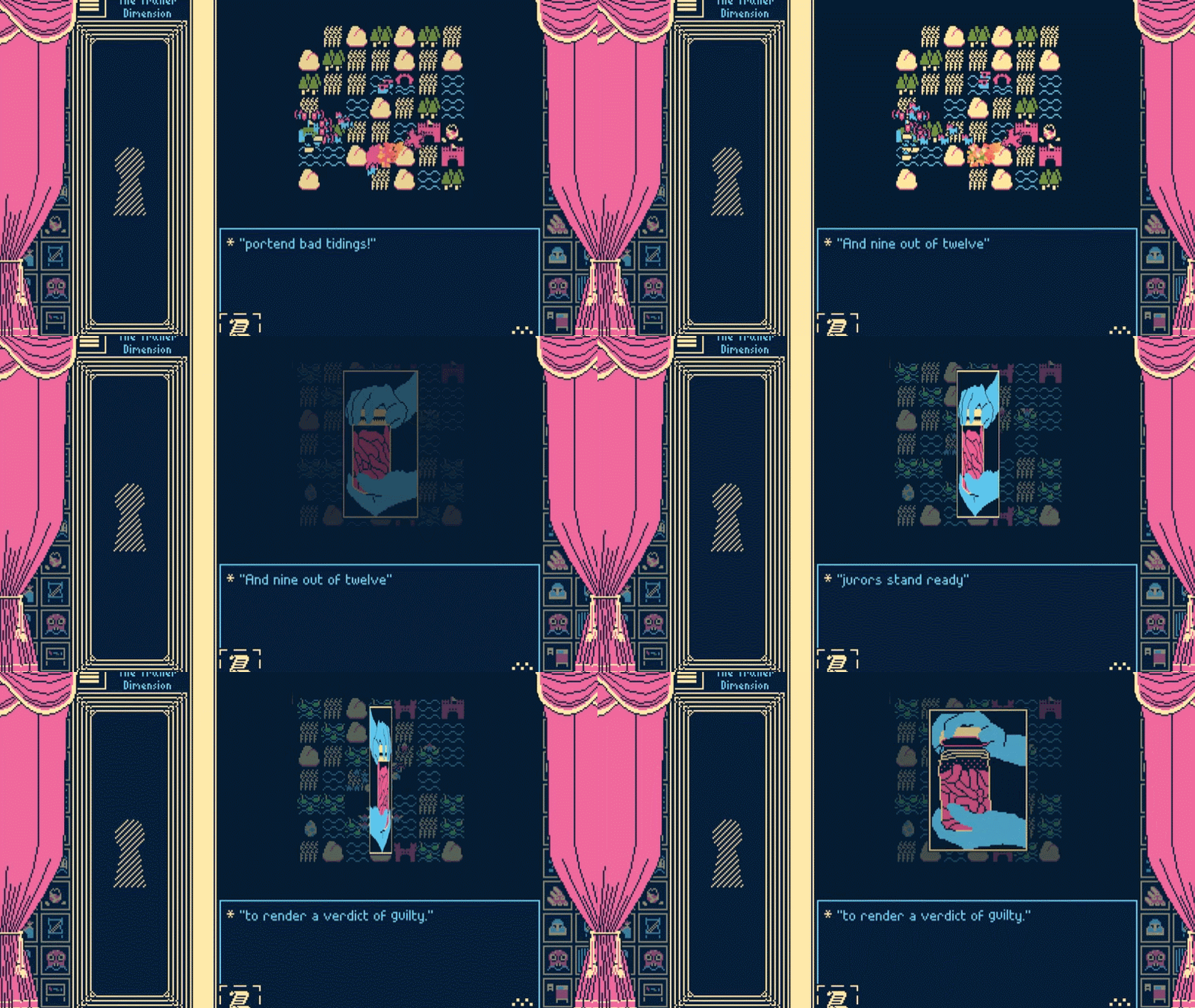
The game’s narrative is anchored by the player’s role as an accidental queen, tasked with rallying faeries, locating keys, and breaking curses. The primary antagonist—and guide—is Puck, a mysterious, erratic figure who embodies both zany charm and underlying menace. Puck serves as the architect of the game’s shifting realities; after each successful run, players are granted a single question before he resets the entire universe, further emphasizing the game’s commitment to unpredictability.
Visual Style and Critical Reception
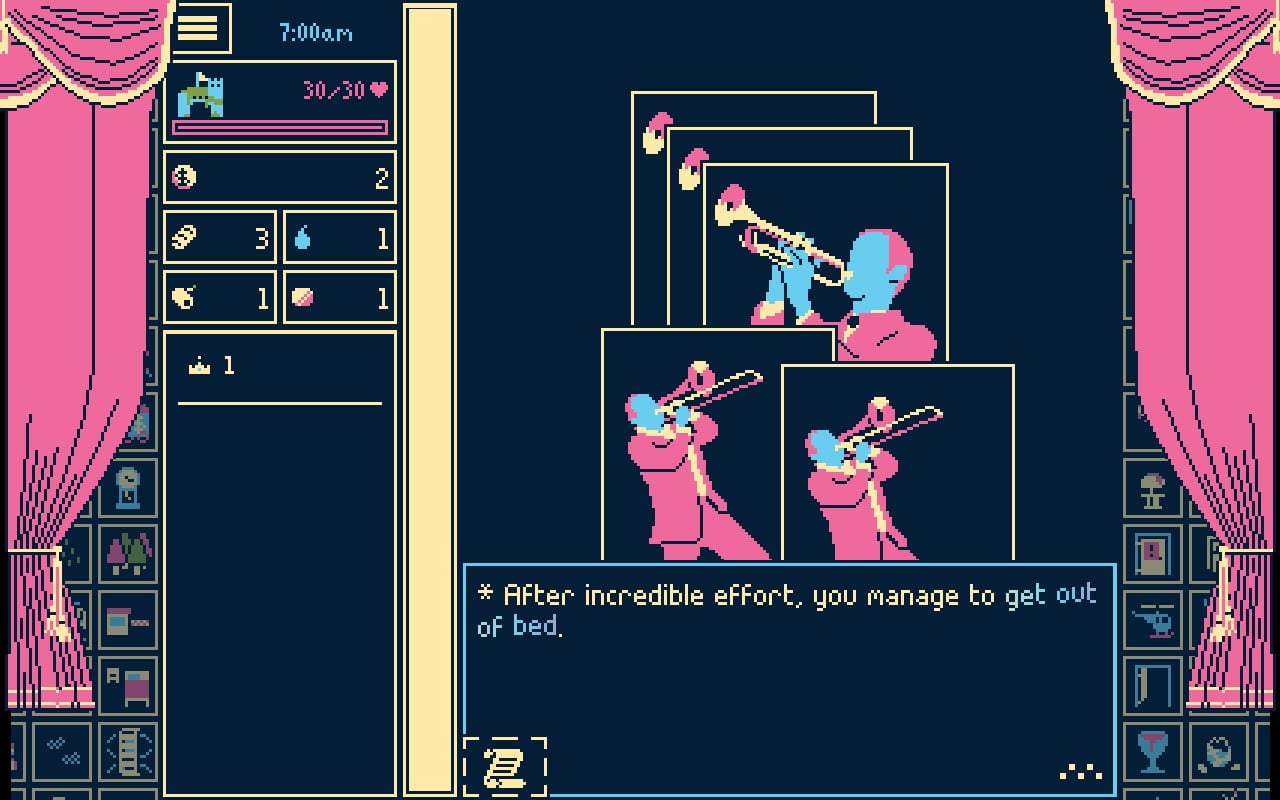
Visually, Titanium Court presents a vibrant, pastel-hued aesthetic that feels like a collage of repurposed clip-art and retro pixel art. From laughing office workers to dynamic basketball dunks, the game utilizes a bizarre array of iconography that creates a “lurid” and engaging atmosphere. It is this willingness to dismantle the repetitive nature of the genre that earned Titanium Court its accolades at the IGF Awards. By treating the match-three grid as a complex, dangerous puzzle box rather than a static board, Thompson has crafted a roguelike experience that rewards players for embracing the chaos.