
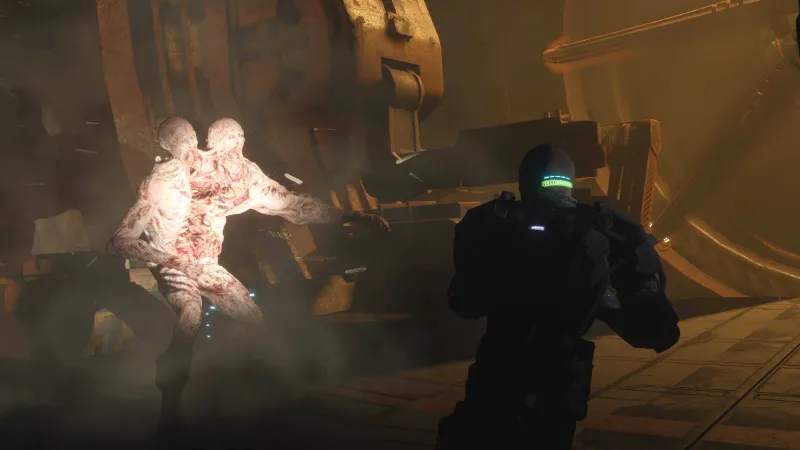
The Callisto Protocol, the latest survival-horror title from Glen Schofield, arrives on Jupiter’s moon, Callisto, delivering a familiar yet flawed experience that struggles to evolve the genre tropes established by the original Dead Space nearly 15 years ago. While the game provides flashes of brilliance in its opening hours, it ultimately settles into a repetitive eight-hour slog that feels more like a relic of the past than a modern evolution of sci-fi horror.
A Familiar Descent into Black Iron Prison
The narrative centers on Jacob Lee and Dani Nakamura, who find themselves imprisoned in the high-security Black Iron Prison following a crash landing. The atmosphere is thick with dread as Jacob escapes his cell, only to encounter the “biophage”—mutated, grotesque monstrosities that serve as the primary threat throughout the facility. Despite the promising setup, the story quickly falls into a predictable rhythm of radio-based fetch quests, offering little in the way of narrative depth until a rushed, inorganic conclusion clearly designed to push future DLC.
Combat: The Highs and Lows of Melee
The game’s standout feature is its visceral melee combat. Dodging by maneuvering the control stick is engaging, and the heavy, impactful swings of Jacob’s electric baton provide a satisfying rhythm to encounters. However, the experience is hampered by surrounding systems. While firearms are available, they lack the punch of the melee baton and feel largely interchangeable. The GRP telekinesis system also feels underutilized, often restricted to environmental kills that rely on the same few hazards.
Technical Frustrations and Design Stumbles
The game’s progression is frequently interrupted by questionable design choices. Boss encounters are particularly egregious, recycling the same enemy types in different arenas while relying on one-hit kill mechanics that negate the tension of survival horror. This is compounded by a punishing and outdated checkpoint system that forces players to repeat lengthy combat sequences and resource gathering upon death.
Further friction is introduced through clunky user interface and animation choices. Audio logs force players to remain in a menu, preventing exploration, while weapon-switching animations are cumbersome and prone to interruption. Even the signature death animations, though visually gruesome, suffer from inconsistent quality, ranging from impressive body horror to unintentional ragdoll-physics comedy.
A Missed Opportunity
While The Callisto Protocol attempts to recapture the magic of its spiritual predecessor, it fails to refine the core mechanics required to make the experience feel cohesive. The combat system shows promise, but it is ultimately weighed down by a thousand small, frustrating design choices. For players seeking a fresh take on sci-fi survival horror that acknowledges how far the genre has evolved since 2008, The Callisto Protocol unfortunately misses the mark, leaving players feeling underwhelmed and disappointed.