
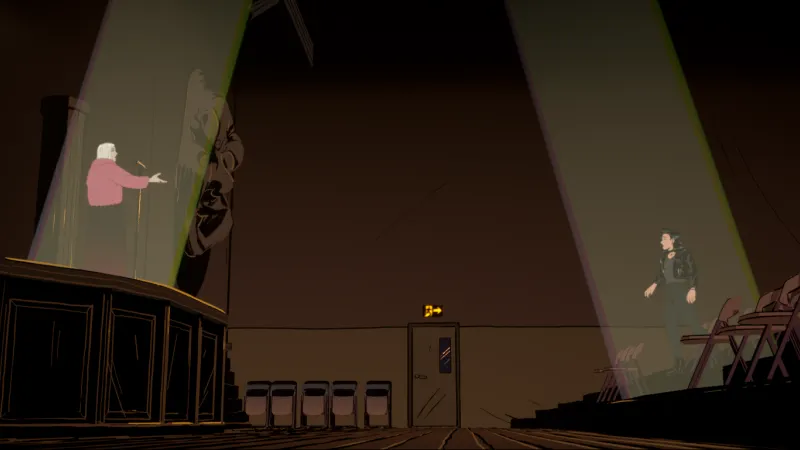
Summerfall Studios successfully bridges the gap between interactive gaming and Broadway-style storytelling in Stray Gods: The Roleplaying Musical, a fresh take on Greek mythology that hits all the right notes despite some technical hiccups. As a fan of everything from Hamilton to La La Land, I found this unique title to be a compelling experience that demands a standing ovation.
A Fresh Spin on Ancient Myths
In Stray Gods, players step into the shoes of Grace, a woman thrust into a supernatural mystery after being accused of murdering a Muse. In this world, “Idols”—reincarnations of ancient Greek gods who grant immortality and powers to humans—live among us. Grace inherits the power of song, allowing her to force others to belt out their deepest emotions through interactive musical numbers. While Greek myth adaptations are a dime a dozen in pop culture, the worldbuilding here feels distinct and grounded.
Beyond Traditional RPG Mechanics
The term “role-playing” in the title is literal rather than mechanical; don’t expect gear, experience points, or leveling systems. Instead, you define Grace through three personality traits: Charming, Kickass, or Clever. These choices unlock specific dialogue options and dictate how you navigate the narrative. The core gameplay revolves around these conversations and, most importantly, the musical sequences.
Dynamic Music and Timed Choices
The songs are the game’s crowning achievement. During musical numbers, you are presented with a list of responses that must be selected in real-time. While the timed nature of these choices may initially feel stressful, it forces you to play based on instinct rather than calculated strategy. If you prefer a more relaxed pace, the game does offer the option to disable the timer, though I highly recommend keeping it on for the most authentic experience.
Your choices fundamentally transform the songs themselves. Depending on your input, a melancholic ballad can shift into a high-energy rock anthem. Witnessing how these compositions branch and evolve is thrilling, making repeat playthroughs feel genuinely rewarding as you uncover different musical styles and narrative paths.
A Stellar Vocal Cast
The talent behind the microphone is exceptional. With a cast of seasoned voice actors, the performances—particularly from supporting characters like Anjali Bhimani’s Medusa, Erika Ishii’s Hermes, and Rahul Kohli’s Asterion—are consistently impressive. Troy Baker also delivers a standout performance as Apollo.
Laura Bailey, who voices Grace, carries the weight of the production well. While she shines in Broadway-style belting, she occasionally struggles with faster, rap-adjacent cadences in certain songs. However, the game’s design is forgiving; if a specific musical direction isn’t working for you, you can simply pivot your choices in the next branch to hear a different style.
Technical Performance and Final Thoughts
The experience is not without its flaws. I encountered several recurring glitches, including jarring audio clipping where voice lines would start a split-second late, and inconsistent volume levels for certain characters. Additionally, there were rare instances where character models would vanish or scenes would glitch, requiring me to repeat conversations.
Despite these technical shortcomings, Stray Gods is a triumph of creativity. By blending a clever twist on mythology with a genuinely innovative musical mechanic, Summerfall Studios has created a game that feels essential. It is a bold, melodic experiment that succeeds far more often than it falters.