
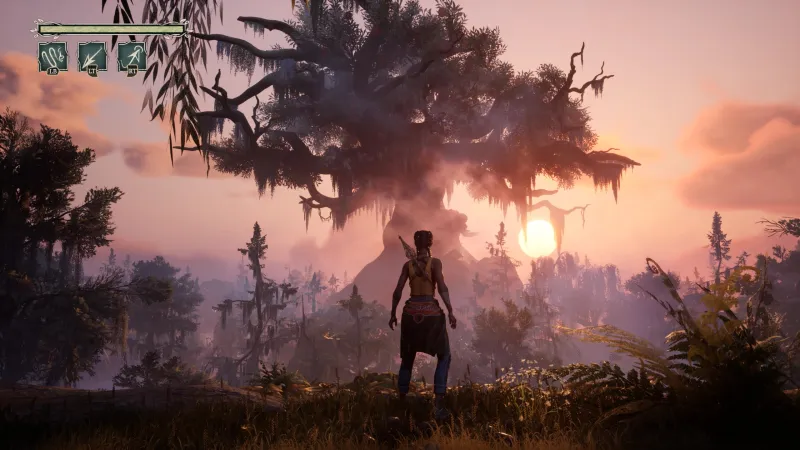
Compulsion Games delivers a captivating action-platformer in South of Midnight, a title that breathes new life into American Southern folklore through the journey of Hazel Flood. While searching for her mother in the wake of a devastating hurricane, Hazel discovers her identity as a “Weaver”—a magical individual capable of manipulating ethereal strands to traverse the world, solve puzzles, and engage in mystical combat. By blending heartfelt family drama with an underrepresented roster of regional cryptids, the game creates an experience that is as emotionally resonant as it is visually striking.
A Narrative Rooted in Myth and Emotion
Hazel’s journey is anchored by her relationships with her mother, her grandmother, and an unlikely companion: a giant talking catfish. As she navigates this strange new reality, she encounters legendary creatures from Southern myth, each burdened by tragic backstories that explain their current curses. These flashbacks are expertly integrated into the main plot, grounding the high-fantasy elements in a deeply personal story. While the game suffers from a sluggish opening and a somewhat abrupt finale, the core narrative remains a touching, memorable experience.
Traversal and the Search for Floofs
The gameplay loop alternates between linear platforming and combat encounters. Hazel maneuvers through the environment using double jumps, gliding, grappling, and wall-running. Players can deviate from the main path to hunt for “Floofs”—the game’s currency for ability upgrades—though the exploration itself feels somewhat utilitarian. Because the game provides a clear directional indicator for the main objective, side paths often feel like brief, mandatory detours rather than organic discoveries. Despite this, the variety of movement techniques keeps the pacing fluid as you navigate the game’s stunningly realized environments.
Artistic Vision and Technical Prowess
The standout achievement of South of Midnight is its distinct aesthetic. By utilizing purposefully skipped frames in its animation, the game achieves a unique look that bridges the gap between the kinetic style of Spider-Man: Into the Spider-Verse and the tactile nature of stop-motion. Whether capturing the warm glow of sunbeams through the dirt at dusk or the haunting, high-contrast intensity of a boss encounter, the game is a visual triumph that performs beautifully on modern hardware.
The Soul of the South: Sound and Music
The audio design serves as the heartbeat of the game, drawing heavily from the rich musical heritage of the American South. The soundtrack is a masterclass in variety, shifting seamlessly between bluegrass, jazz, and folk. The boss battles are particularly noteworthy, featuring original songs with lyrics that reflect the character’s internal struggle during the fight. These cinematic musical sequences transform standard encounters into theatrical performances, elevating the stakes and emotional weight of every conflict.
Combat Evolution: From Simple to Sophisticated
Initially, the third-person combat feels somewhat derivative, lacking the impact needed to make early encounters feel satisfying. However, the system blossoms as players unlock and upgrade their abilities. The “Unravel” mechanic—which allows players to harvest lingering spirits from defeated foes to restore health and reduce cooldowns—becomes the foundation of a frantic, high-risk, high-reward system in the late game. Once players unlock advanced mobility and ability resets, the combat transforms into a fast-paced dance of positioning and resource management. While it is unfortunate that this mechanical depth only fully matures during the final five hours, the payoff is undeniably fun.
Ultimately, South of Midnight succeeds by honoring the traditions of the folklore it portrays. It balances dark, somber themes with a sense of whimsy, ensuring that the stories and songs of the South reach a broader audience. By the time the credits roll, the game leaves you with more than just a completed mission; it leaves you with a newfound appreciation for the legends that inspired its world.