
Milestone’s latest arcade racer, Screamer, attempts to revitalize a stagnant genre by layering complex mechanics and narrative depth onto high-speed racing, but ultimately struggles under the weight of its own ambition. While the game delivers a visceral sense of speed, the cluttered systems and uneven difficulty create a disjointed experience that often prioritizes technical fiddling over pure driving enjoyment.
A Narrative That Hits the Redline
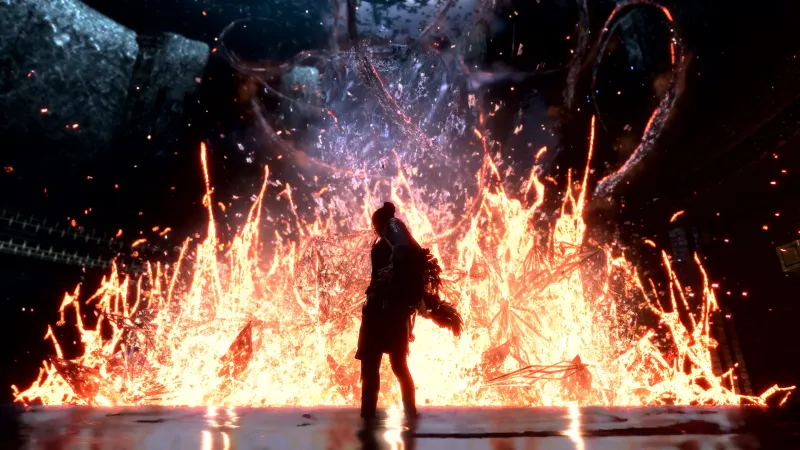
The Tournament mode serves as the game’s core, blending character-driven dialogue with high-octane anime cutscenes. Set in a near-future sci-fi world, the story focuses on a group of volatile, emotionally damaged drivers competing for glory. While the voice acting is commendable, the writing suffers from relentless melodrama. The characters lack subtlety, and their constant, aggressive posturing becomes exhausting rather than compelling. This fatigue extends to the soundtrack; while the high-energy, beat-heavy score fits the aesthetic, its unrelenting intensity eventually forces players to reach for the mute button.
Driving Mechanics: Precision Meets Complexity
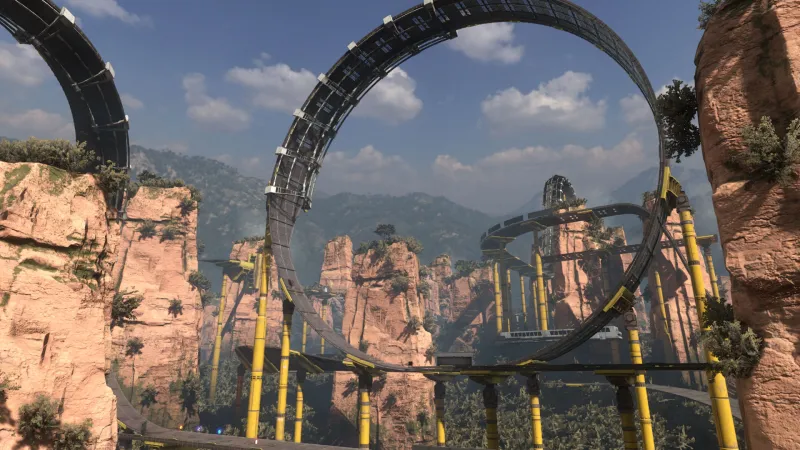
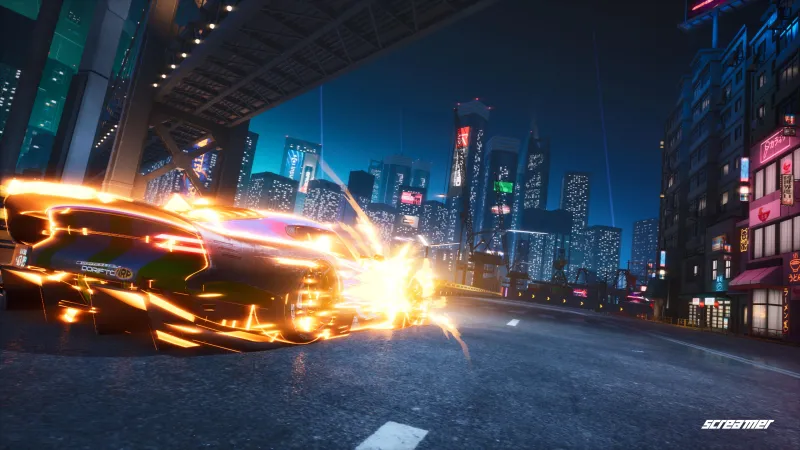
Where Screamer truly shines is in its handling model. Milestone has implemented an innovative dual-stick steering system that allows players to control the front and rear wheels independently. Once mastered, this provides a level of precision that feels incredibly satisfying. The tracks are vibrant, the supercars are visually striking, and the core sensation of speed is undeniably intoxicating.
The Breakdown: Mechanics Overload
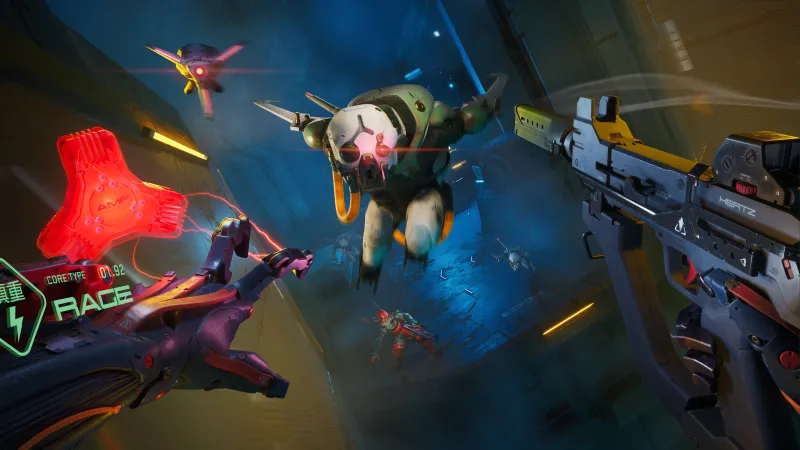
The game’s promise begins to unravel as it introduces a barrage of secondary systems: boost, sync, entropy, strike, shield, hype, overdrive, and character-specific skills. These mechanics frequently clash rather than complement one another. For example, visual cues for semi-automatic shifting are positioned at the screen’s periphery, pulling your eyes away from the track. Furthermore, some character-specific skills are so punishing that a single miscalculation—like accidentally detonating your own vehicle—can ruin an entire race.
Unbalanced Challenges and Frustrating Design
Progression is hampered by questionable mission design and erratic difficulty spikes. Players are often tasked with illogical objectives, such as forcing a win while simultaneously trying to knock out opponents from behind—a requirement that actively works against the goal of finishing first. This is compounded by inconsistent AI rubberbanding, which can make the game feel either trivial or unfairly difficult, creating artificial roadblocks in the story progression.
Finding Fun in Flexibility
Despite the cluttered campaign, the Arcade mode offers a welcome reprieve. By stripping away the narrative and restrictive objectives, it allows players to focus on the act of racing itself. Additional challenge modes, such as checkpoint runs and explosive overdrive sprints, provide a fun change of pace. Furthermore, the inclusion of four-player splitscreen multiplayer is a massive win for the genre, significantly boosting the game’s replay value, alongside robust online lobbies that support up to 16 players.
Final Verdict
Milestone deserves credit for attempting to inject narrative context and mechanical depth into the arcade racing formula. However, the result is a game that feels over-engineered. The combination of convoluted systems and arbitrary difficulty objectives obscures the high-quality racing engine beneath. Screamer is an interesting experiment, but for those seeking a pure, streamlined arcade experience, this track may have one too many turns.