
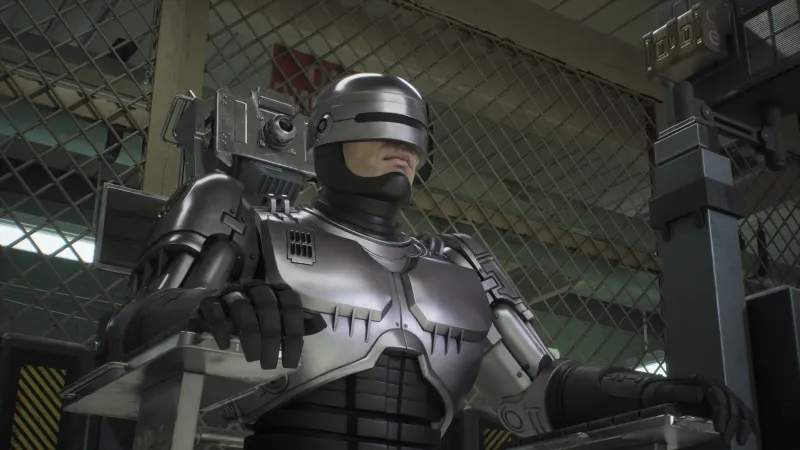
RoboCop: Rogue City stands out as the finest digital outing for the iconic action hero to date. While the bar for past RoboCop titles was admittedly low, this narrative-driven first-person shooter delivers a thrilling experience that captures the heart of the franchise. By blending a substantial original story, clever references, and the series’ signature cheesy humor, the game succeeds as a love letter to the films. However, much like the dystopian Detroit it depicts, Rogue City is rough around the edges, resulting in a flawed but undeniably entertaining experience.
A New Chapter in Detroit’s Decay
Set between the events of RoboCop 2 and 3, the game follows Alex Murphy as he navigates a city on the brink of collapse. A mysterious criminal mastermind known as “The New Guy” is rallying Detroit’s gangs, while the police force struggles under the bureaucratic thumb of OCP’s Max Becker—a corporate antagonist who views RoboCop as an obsolete relic. The narrative weaves in several side threads, ranging from investigative journalism exposing OCP secrets to psychological therapy sessions and the complications of working with a rookie partner who may be an informant.
The 20-hour campaign effectively ties these stories together, though it does suffer from pacing issues in the final act, including a few unnecessary false endings. Despite this, the writing serves as a stronger sequel than the actual film RoboCop 3. Hearing Peter Weller reprise his legendary role is a highlight, though the surrounding cast is less consistent. Technical shortcomings are evident, particularly in character models and animations; the lip-syncing is notably poor, often failing so completely that it appears characters are speaking via telepathy.
Policing the Streets: Side Missions and Satire
Between main missions, players can explore the police station or open-world hubs like downtown Detroit. These areas offer bizarre side missions that perfectly capture the dark satire and campy goofiness of the original films. Whether you are solving a murder on a sunscreen commercial set, dispersing hooligans, or performing the “Robot Dance” for a child, these tasks serve as excellent vehicles for RoboCop’s iconic, deadpan one-liners. It is a game that knows exactly what it is and leans into it with confidence.
Morality in a Metallic World
The dialogue system allows players to define their version of the hero, oscillating between a strict, law-abiding enforcer and a more empathetic figure. These choices force players to confront moral shades of gray, such as navigating corrupt mayoral campaigns or engaging in corporate espionage for the “greater good.” These decisions carry weight, impacting the story and leading to multiple endings that feel earned and meaningful.
Combat: Become the Human Tank
Combat is all about power. As RoboCop, you don’t need cover; you are a walking tank. Marching through corridors while absorbing hails of gunfire is immensely satisfying, especially when you land headshots or grab enemies to fling them across the room. While you feel powerful, you aren’t invincible—higher difficulty spikes, particularly during boss battles, can feel unfairly punishing due to the game’s limited mobility compared to the relentless speed of your opponents.
The arsenal is functional but varied in quality. While the signature sidearm with unlimited ammo is satisfying, other weapons like shotguns and sniper rifles feel underwhelming. The enemy A.I. is equally erratic, often standing in place or getting stuck in the environment. Despite these quirks, the action remains consistently fun, especially when you factor in destructible environments that turn gunfights into chaotic, gory spectacles.
Progression and Detective Work
Skill points can be invested into traits like Combat, Armor, Engineering, and Deduction. My favorite perks included armor buffs that caused bullets to ricochet back at attackers and engineering skills that allowed me to bypass safe combinations. The game also features a chipboard system for passive upgrades, though the constant need to re-slot nodes for every new board becomes tedious. Outside of combat, detective segments—scanning crime scenes and questioning suspects—provide a nice, slower-paced break that utilizes Murphy’s non-lethal talents.
Technical Hurdles and Final Verdict
Unfortunately, technical bugs are a persistent issue. Enemies frequently clip through floors or walls, cutscenes suffer from pixelated transitions, and audio mixing is often uneven. I encountered instances where the game failed to register objective completion, forcing reloads, and some weapons suffered from auto-firing glitches.
Hopefully, future patches will address these stability issues. If you are a fan of the franchise, Rogue City is a nostalgic and potent shooter that feels like a long-lost gem from the early 2010s. For those less familiar with Alex Murphy, the game may feel somewhat dated, but as a B-tier love letter to the tin man in blue, it is a welcome return to the limelight.