
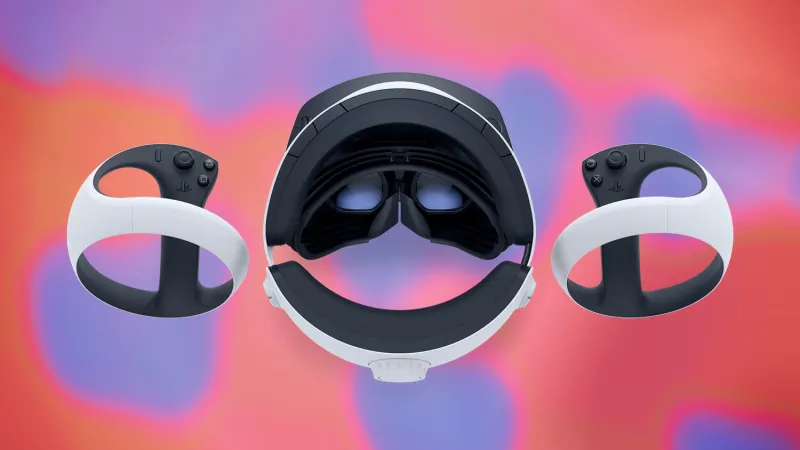
Sony stands alone among the “big three” console manufacturers in its continued commitment to virtual reality, and the PlayStation VR2 represents the next logical step in that journey. While the original PS VR served as a functional, accessible entry point for console gamers, the PS VR2 improves upon nearly every hardware aspect—though it stops short of being the industry-shifting revelation many anticipated.
Simplified Setup and Connectivity
The most immediate quality-of-life improvement is the hardware configuration. The original PlayStation VR was notorious for its messy cable management and complex HDMI pass-throughs. The PS VR2 streamlines this significantly, utilizing a single, 15-foot USB-C cable that plugs directly into the PlayStation 5. While the cable is permanently attached to the headset, its generous length provides enough freedom of movement for most play spaces.
Once connected, the onboarding process is intuitive. The system guides you through a series of quick, effective calibration steps, including an impressive eye-tracking setup. While currently used primarily for menu navigation, the precision of this eye-tracking technology holds significant potential for future gameplay mechanics.
Design, Comfort, and Passthrough
In terms of ergonomics, the PS VR2 is arguably the most comfortable headset on the market. It utilizes a “baseball cap” strap design that shifts the weight away from the face, allowing it to rest gently in front of the eyes rather than pressing against the skin. This design is a major win for glasses wearers, as it prevents the cramped, uncomfortable fit common in other devices. The light-shielding rubber is also highly effective, successfully blocking out ambient light to maintain immersion and reduce potential nausea.
The inclusion of a dedicated passthrough camera button is a standout feature. Being able to instantly toggle a high-resolution view of your surroundings is incredibly practical for real-world interactions without needing to remove the headset. It is a refinement that other manufacturers should adopt as a standard.
Refined Controllers and Audio
The PS VR2 Sense controllers are a massive leap forward from the aging Move controllers. They are responsive, ergonomic, and utilize advanced tracking that no longer relies on external light sources. My only critique is the initial pairing process, which still mandates a wired USB-C connection to the console—a minor inconvenience in an otherwise seamless ecosystem.
The included earbuds are equally well-considered. Designed with minimal wire slack, they hang perfectly near the ears without getting tangled or in the way. It is a small, thoughtful touch that demonstrates Sony’s focus on user experience.
Visual Fidelity and Haptic Feedback
Despite the hardware upgrades, the visual experience remains the most contentious point. While the PS VR2 is a clear step up from its predecessor, the “screen-door effect” and general blurriness inherent to current VR technology persist. When transitioning from a standard 4K PS5 game to the headset, the gap in visual fidelity remains stark.
Furthermore, the headset’s built-in haptic feedback is a feature I found largely unnecessary. Rather than providing the nuanced, immersive sensations found in the DualSense controller, the headset vibration feels like a dull, intrusive rumble. In instances where motion sickness might occur, this added vibration serves only to exacerbate discomfort rather than enhance the experience.