
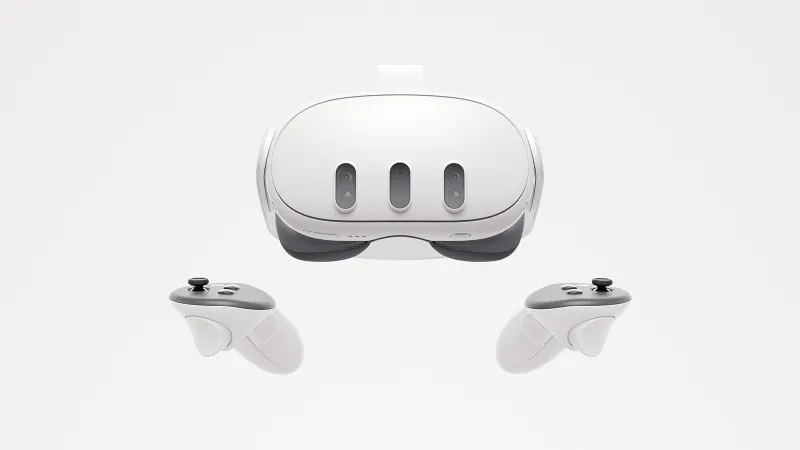
The Meta Quest 3 officially sets a new benchmark for virtual reality hardware, delivering superior visual clarity and groundbreaking mixed-reality capabilities that make it Meta’s most impressive headset to date, despite lingering limitations in software optimization.
Design, Comfort, and Visual Fidelity
Wearing the Meta Quest 3 is a mostly comfortable experience. The adjustable straps allow for a snug fit, which is essential for blocking out ambient light and maintaining the precise positioning required for optimal visual focus. While the tension can occasionally lead to headaches if adjusted too tightly, this level of control is a welcome trade-off compared to a loose-fitting device. Furthermore, the internal space is surprisingly accommodating for those who wear glasses, rivaling the user-friendly design of the PlayStation VR2.
The display resolution represents a massive leap over the Quest 2. While VR technology still faces the inherent challenge of having a screen mere inches from your eyes, the Quest 3 delivers the sharpest image Meta has ever produced. It successfully narrows the gap between standalone VR and high-fidelity wired experiences, though a traditional high-end TV display still holds a slight edge in raw visual crispness.
Mixed Reality: The True Game-Changer
The most significant innovation in the Quest 3 is its overhauled approach to mixed reality. Unlike its predecessors, the headset utilizes high-resolution, full-color pass-through cameras that make interacting with your physical surroundings feel natural. The clarity is such that you can comfortably read text on your smartphone screen without needing to remove the headset.
This technology opens the door for immersive gaming experiences where your physical environment blends with digital elements. Whether it is transforming your office into an alien landscape or integrating virtual creatures into your living room, the technical demonstration of this feature is both charming and highly promising for future software development.
Controller Evolution and Hand-Tracking
The controllers remain largely unchanged, which is a positive choice given their historical reliability and excellent motion tracking. The removal of the previously required tracking rings allows for a more ergonomic design, enabling users to bring their hands closer together for more fluid gameplay.
Hand-tracking remains an available feature, though it continues to be a mixed bag. While the improved cameras make navigating menus by physically pushing virtual buttons feel more intuitive, the system still lacks the consistent precision required for seamless interaction. Most users will likely find themselves gravitating back to the controllers for a reliable experience.
Library Compatibility and Performance
The Quest 3 maintains full backward compatibility, allowing your existing library to transition seamlessly to the new hardware. Save data migrates without any extra configuration, which is an impressive convenience. However, performance varies depending on individual game optimization.
While titles like Beat Saber and Pistol Whip perform flawlessly, other favorites—such as Resident Evil 4—exhibit occasional stuttering and visual artifacts that can be jarring. Conversely, newer titles like Drop Dead: The Cabin, Runner, and Resist showcase the headset’s potential, with Runner proving particularly enjoyable due to the Quest 3’s superior wireless freedom compared to the PlayStation VR2.