
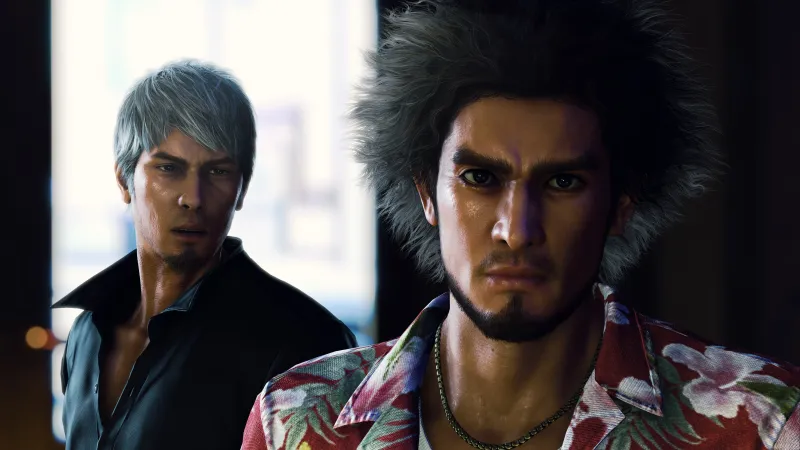
Like a Dragon: Infinite Wealth stands as developer Ryu Ga Gotoku’s (RGG) most ambitious project to date, delivering an epic, continent-spanning narrative that serves as both a high-water mark for the series and a showcase of its most glaring inconsistencies. Released as a direct follow-up to Yakuza: Like a Dragon, this massive RPG forces players to grapple with the emotional weight of a story that concludes two decades of plot threads, leaving the player—much like its protagonists—feeling simultaneously exhilarated and exhausted.
A Dual-Protagonist Journey Across Borders
The story picks up years after the dissolution of the Tojo Clan and Omi Alliance, following Ichiban Kasuga’s quest to rehabilitate former yakuza. When his efforts to help them integrate into society collapse, Ichiban is pulled back into the criminal underworld. The trail leads him to Hawaii in search of his long-lost mother, Akane, where he eventually crosses paths with the legendary Kiryu Kazuma.
Kiryu’s role is pivotal here; now battling cancer and facing his own mortality, he is a playable character whose arc provides a poignant, humanizing “passing of the torch.” Watching Kiryu reckon with the life he led after the events of Yakuza 6 adds a layer of depth that, while debatable in its final execution, offers a compelling road to character growth. The narrative rhythm benefits significantly from the dual-protagonist structure, allowing the cast—including standouts like newcomers Chitose and Tomizawa—room to breathe.
Political Ambition and Narrative Stumbles
RGG utilizes the Hawaiian setting to tackle heavy themes, including the treatment of the unhoused, the failures of the police state, and the complexities of criminal rehabilitation. It is refreshing to see a AAA studio approach these topics with maturity. However, the game falters significantly with the Palekana religious cult storyline. The antagonist, Bryce Fairchild, lacks the depth and nuance typically found in RGG’s villains, feeling like a flat “bad guy” in a narrative that otherwise strives for complexity. The game’s tendency to shove this plotline aside suggests even the developers recognized its shortcomings.
Voice Acting and Technical Disparities
The experience is further complicated by inconsistent voice acting. While the Japanese cast delivers stellar performances, the English localization often struggles. Many American characters sound unnatural, as if lines are being read phonetically, creating a jarring disconnect that can pull players out of the immersion. Even the English dub for the main cast often feels lackluster compared to the emotional weight of the original Japanese performances.
Refined Combat and World Exploration
Gameplay remains the series’ strongest asset. Exploring the vibrant districts of Honolulu, alongside the nostalgic streets of Kamurocho and Ijincho, is a delight. The turn-based combat system, introduced in the previous entry, has been refined into a deep, engaging loop. The addition of directional and combo attacks, combined with dynamic party synergies, keeps battles feeling fresh even dozens of hours in. However, the requirement to grind levels in repetitive, monotonous dungeons occasionally turns the experience into a chore.
A Wealth of Side Content
The side content is a mixed bag. While substories—such as a hilarious dating app scenario—are genuinely well-crafted, other diversions like “Dondoko Island” and various Pokémon-inspired minigames feel convoluted and dull. These activities interrupt the game’s flow with lengthy tutorials, though they are largely optional after their introduction. For the dedicated, there is easily over 100 hours of content here, though a more focused edit could have trimmed the fat.
Ultimately, Like a Dragon: Infinite Wealth is a swing for the fences. It is a massive, sprawling phenomenon that occasionally buckles under its own weight. Yet, its ability to maintain a fresh combat loop for 60+ hours and provide such profound, intimate moments with beloved characters is a feat rarely seen in modern gaming. It is a tiring, imperfect journey, but one that leaves you eager to see where this crew goes next.