
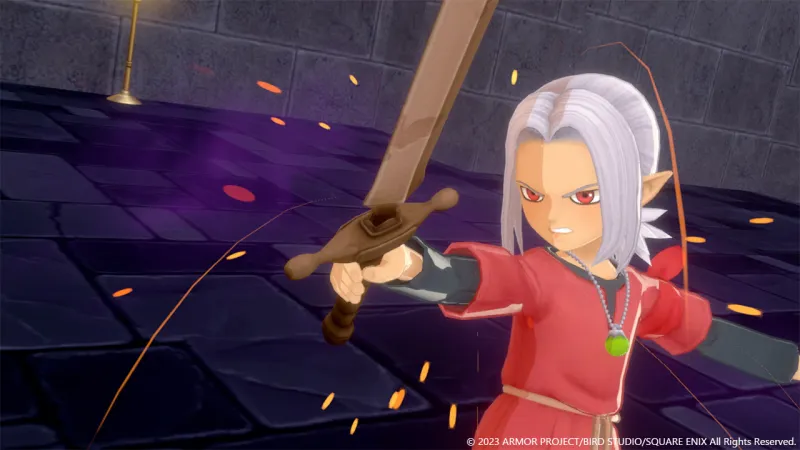
Dragon Quest Monsters: The Dark Prince brings the beloved franchise’s signature charm, emotional storytelling, and iconic Slimes to the Nintendo Switch, delivering a polished, turn-based monster-wrangling experience that honors the series’ legacy while introducing a refined, accessible combat system.
A Journey into Monster Wrangling
In The Dark Prince, players step into the shoes of Psaro, a half-human, half-monster protagonist cursed with the inability to harm monsters directly. This narrative hook forces him to become a master wrangler, capturing and commanding creatures in tactical, turn-based combat. While the game features an online mode for testing team compositions against other players, the matchmaking process can be sluggish, making the solo campaign the primary draw for most players.
The Synthesis System: Power vs. Grinding
The core of character progression lies in the synthesis system, which allows players to fuse two monsters to create a superior offspring. This mechanic is rewarding, as it enables you to pass down skill points, resulting in powerful creatures that far outclass their wild counterparts. However, this system necessitates significant grinding. Because every synthesized monster resets to level 1, late-game players may find themselves forced into tedious leveling sessions to keep their roster competitive for boss encounters.
Streamlined Combat and Tactical Depth
Despite the vast array of monster combinations, combat remains surprisingly accessible. The game offers a tactics system that lets you dictate AI behavior, such as prioritizing healing or aggressive strikes. While you can issue manual commands for precise control, the game’s AI is often efficient enough that many players may find themselves relying on automatic battle modes for non-boss encounters, which occasionally diminishes the sense of strategic challenge.
A Classic Tale with Familiar Roots
The narrative follows Psaro’s quest to challenge his father, joined by his companions Rose and Toilen. While the story lacks major plot twists or complex character development—largely because Psaro remains a stoic protagonist with limited dialogue options—it succeeds as a cozy, old-fashioned fairy tale. The game serves as a compelling companion piece to Dragon Quest IV, offering a fresh perspective on the history of a pivotal character.
Performance and World Design
Psaro’s journey takes him through the various circles of the magical dimension of Nadiria. While the world is visually thematic, its structure can feel repetitive, as each circle adheres to a predictable pattern of tiers and dungeons. Unfortunately, this repetitive design is exacerbated by noticeable performance issues and frequent frame rate drops. While these technical hiccups don’t break the game, they do become tiresome during extended play sessions.
Dungeons: The Hidden Gem
The dungeons stand out as the most polished aspect of the level design. Despite a consistent structure—featuring traversal gimmicks and teleportation pads—the puzzles within these areas are genuinely engaging. The developers struck a successful balance between difficulty and accessibility, offering a refreshing intellectual challenge that keeps the gameplay loop from becoming entirely stale.
Ultimately, by adhering strictly to Dragon Quest traditions, The Dark Prince occasionally suffers from flat characterization and cyclical world design. Nevertheless, it plays to its core strengths, providing a robust RPG experience anchored by a deep monster-collection system and satisfying, puzzle-filled dungeons.