
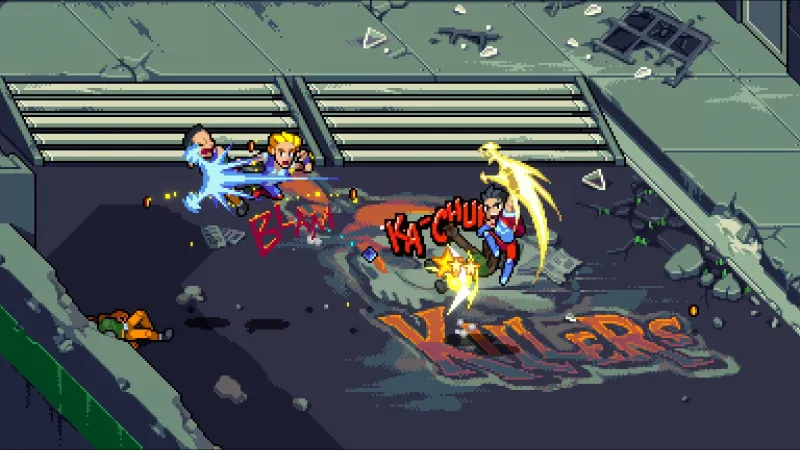
Double Dragon Gaiden: Rise of the Dragons attempts to revitalize the classic beat ‘em up franchise by introducing a fresh tag-team mechanic, though the experience is ultimately hampered by inconsistent combat design and frustrating difficulty spikes. While the game succeeds as a modern throwback, it struggles to balance its ambitious systems with the precision required for high-stakes arcade action.
A Roster of Varied Combat Styles
Billy and Jimmy Lee return alongside Marian and newcomer Uncle Matin to clean up gang-infested streets using distinct martial arts styles. Each character brings something unique to the table: Marian excels at long-range firearm and gadget combat, while Uncle Matin utilizes brute strength and a riot shield for close-quarters dominance. Jimmy and Billy also feel distinct, with Jimmy offering superior agility and Billy favoring heavier, slower strikes. However, the balance is questionable; some characters lack effective jump attacks, making them liabilities against airborne enemies, and certain heroes feel significantly more capable than others, rendering the tag-team mechanic less of a strategic choice and more of a forced necessity.
The Tag-Team Mechanic and Combat Flow
Whether playing solo or in local co-op (with online play planned for a future update), players control two heroes simultaneously. Swapping characters via a shoulder button is intended to extend combos or provide an emergency escape when cornered. The combat is at its best when you are successfully juggling foes or utilizing special attacks to knock enemies into one another. The game also incentivizes aggressive play by rewarding health items for multi-enemy takedowns. Unfortunately, the fluid animations often result in a lack of “snappiness.” Attacks feel delayed and heavy, and vertical movement is sluggish, making it difficult to dodge environmental hazards like falling rocks or lightning strikes.
Design Flaws and Frustrating Difficulty
Several design choices actively detract from the fun. Sharing the same button for picking up items and grappling often leads to missed grabs, leaving players vulnerable. More egregious is the game’s tendency toward stun-locking; once caught in an enemy combo, players can lose entire health bars instantly. Because there is no invincibility window when tagging in a partner, summons often result in the new character being hit immediately. To make matters worse, off-screen enemies frequently deal damage, and the final stage—which forces players to face every boss simultaneously—feels unfairly punishing rather than challenging.
Progression and Replayability
The game features an evolving level structure where you can tackle four main stages in any order. Each subsequent stage chosen becomes longer and more difficult, adding sub-bosses and increasing rewards. This system successfully mitigates the monotony often found in the genre. Between stages, players can select randomized perks to enhance combat effectiveness, such as increased combo damage or health recovery. While collected coins can be used to purchase Continues, the rising cost per death makes failure feel overly punitive. Tokens earned throughout the game are better spent on unlocking checkpoints or additional playable characters, providing a clear incentive for those willing to endure the game’s more frustrating moments.
Double Dragon Gaiden: Rise of the Dragons is a respectable attempt to bring the Lee brothers back into the spotlight, but it falls short of the polish seen in other genre contemporaries. It offers a solid foundation for fans of the series, provided they are willing to exercise significant patience with its more aggressive design choices.