
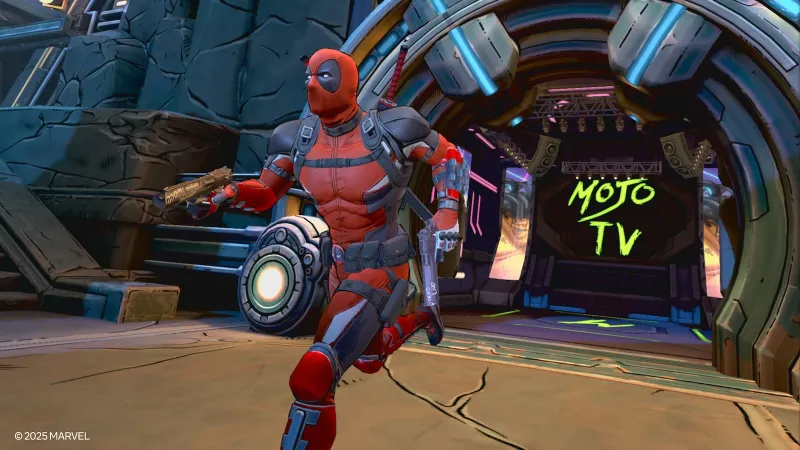
Deadpool VR, the latest virtual reality outing for Marvel’s “Merc with a Mouth,” launched recently, offering players a polarizing experience that mirrors the character’s own divisive nature. Whether you find the constant fourth-wall-breaking and vulgar humor hilarious or exhausting will ultimately determine your enjoyment of this title, which balances frantic combat with a hit-or-miss comedic script.
Inside the Mind of the Merc
The game places you directly inside Deadpool’s psyche. The narrative begins as a simple freelance mission to reclaim the SHIELD Helicarrier, but quickly devolves into an intergalactic reality show orchestrated by the villain Mojo. You are tasked with traveling across the universe to capture B-tier Marvel villains to face off in combat. While the plot is intentionally predictable—a fact Deadpool frequently points out himself—the narrative serves merely as a vehicle to showcase the character’s signature chaotic personality.
A Staggering Amount of Dialogue
One of the most technically impressive aspects of Deadpool VR is the sheer volume of dialogue. The developers have included unique lines for different Deadpool variants, even during primary story sequences, which adds replay value. However, the humor is inconsistent. Neil Patrick Harris provides the voice work, but his performance fluctuates between an imitation of Ryan Reynolds, flat line readings, and moments of genuine comedic energy.
When the Jokes Actually Land
The comedy shines brightest when it tackles niche video game culture and meta-design tropes, such as mocking the logic of doors unlocking only after a room of enemies is defeated. When the game references cult classics like Vanquish or makes bizarre, specific observations about industry figures, it is genuinely charming. Unfortunately, these moments are interspersed with pop-culture references that often feel dated or forced, leading to an uneven comedic experience.
Combat Mechanics: Guns vs. Swords
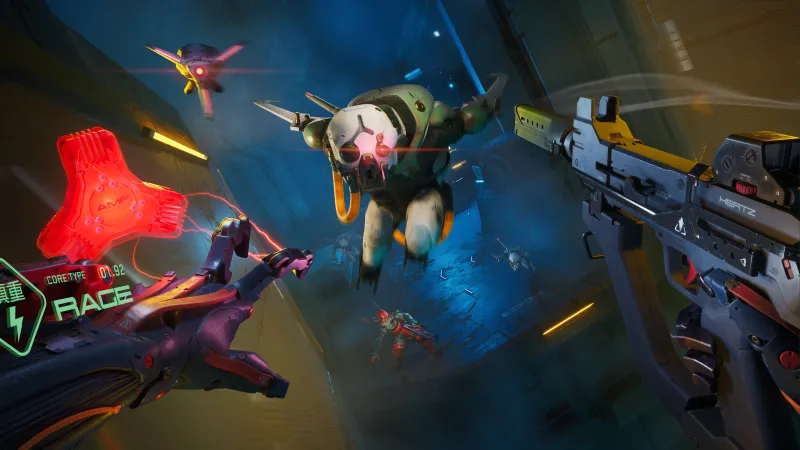
Gameplay revolves around a mix of dual-wielded guns, twin swords, and grenades. The combat is high-energy, and pulling off slow-motion maneuvers—like kicking an enemy’s head and snatching their gun mid-air—feels satisfying. While gunplay is responsive and fun, the sword-swinging mechanics suffer from the same repetitiveness found in many other VR titles. Players who prefer ranged combat will find the gunplay to be a perfectly viable and more enjoyable way to navigate the game’s encounters.
Boss Battles and Repetitive Arenas
The boss fights serve as the high points of the experience; while not overly difficult, they function as engaging exercises in superhero choreography. Conversely, the segments between boss encounters often feel like filler, pitting the player against bots in maps designed to mimic online multiplayer modes. These sequences feel like a chore, making the final act—a string of back-to-back boss fights on these generic maps—feel somewhat underwhelming.
Verdict: A Polarizing VR Experience
Your patience with Deadpool VR will depend entirely on your tolerance for the protagonist. Twisted Pixel has successfully captured the rhythm and tone of the character, ensuring he never takes anything seriously. Despite the redundant combat rooms, the game features impressive on-rails sequences and simple, effective VR puzzles that keep the pacing from completely stalling. It is an ambitious, if occasionally irritating, trip into the fractured mind of Marvel’s most talkative anti-hero.