
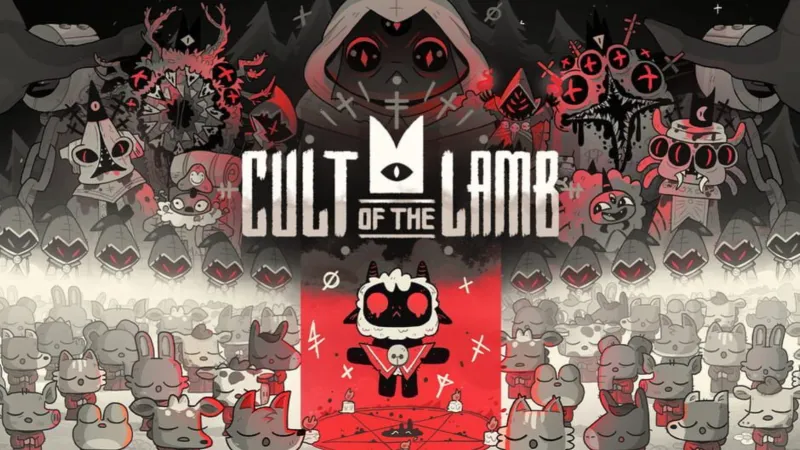
Cult of the Lamb masterfully blends adorable creature aesthetics with macabre cult-management, offering a dual-layered experience that pits intense dungeon-crawling against the high-pressure demands of base building. After spending 20 hours leading a flock of devoted followers, it is clear that while the combat is consistently satisfying, the game’s emphasis on resource management often overshadows the creative potential of designing your own cult compound.
A Divine Journey into Darkness
The premise is simple: you are a lamb sacrificed to four ancient gods, only to be resurrected by a fifth, imprisoned deity. Your mission is to establish a cult in their name to secure your second lease on life. Throughout the journey, the narrative provides necessary context through encounters with gods and NPCs, yet the focus remains firmly on the loop of gameplay. Building your cult from the ground up starts as a labor of love, but it quickly evolves into a factory-like operation where your followers serve primarily as a means to generate currency and resources.
Crunchy Combat and Random Encounters
The dungeon-crawling segments are the game’s high point, featuring slick, impactful combat that feels fresh due to procedurally generated rooms. Whether you are dodging projectiles from skeletons or countering assassins with a life-stealing blade, the action never feels sluggish. While “Curses”—the game’s magical, Fervor-based attacks—are available, they often feel secondary to the fluid rhythm of standard attacks and dodge rolls. By the late game, specialized tarot cards and traits make these dungeons feel increasingly manageable, allowing for a satisfying power fantasy as you face off against bosses.
The Struggle of Cult Management
Your base is where the simulation elements take center stage. You must balance the spiritual needs of your followers—sermons, rituals, and loyalty—with the cold, hard reality of resource management. Keeping your followers fed and happy is essential to your own progression, but the constant pressure to maintain this “machine” often leaves little room for aesthetic expression. Despite the inclusion of various cosmetic items, the push toward efficiency frequently forces players to prioritize utility over design.
From Leader to Ruthless Boss
Initially, the simulation aspect is deeply personal; naming followers after friends or pets creates a genuine connection to your cult. However, as the game progresses, the necessity of optimization can turn the experience into a clinical management task. While the transition from “leader” to “ruthless boss” is clearly an intentional design choice by developer Massive Monster, it can occasionally stifle the joy of customization. It is only in the post-game phase that you are finally granted the breathing room to decorate and curate your cult compound to your liking.
Ultimately, Cult of the Lamb succeeds because its core systems work in perfect tandem. Even when the management side feels stressful or the aesthetic freedom is limited, the fast-paced combat and the rewarding progression loop ensure that you remain fully indoctrinated until the final credits roll.