
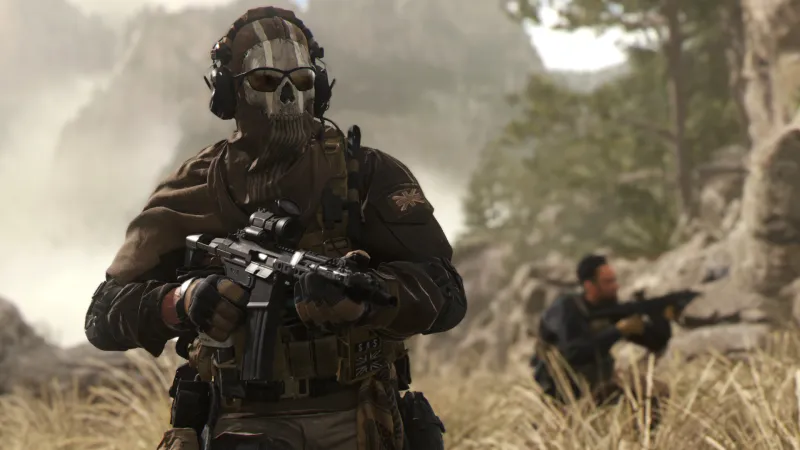
Call of Duty: Modern Warfare II is a deeply unpleasant experience that struggles to justify its own existence. While the franchise has always leaned into the visceral nature of combat—complete with blood-spattered environments and the grim reality of digital casualties—this latest entry feels uniquely hollow. The ugliness isn’t just in the violence; it’s in the cynical, aimless worldview held by its cast of special forces, contractors, and cartel members.
A Narrative Built on Shaky Ground
The campaign kicks off with a thinly veiled dramatization of the real-life assassination of Iranian commander Qasem Soleimani. By replacing him with a fictional “Major Ghorbrani,” the game attempts to ground itself in reality, yet it fails to explore the political weight of such a move. Instead of engaging with the complex moral murkiness of international conflict, the story devolves into a paranoid, disjointed plot involving Russian allies and a Mexican cartel planning a strike on the U.S. mainland.
Players are whisked across the globe, yet the game consistently ignores the larger geopolitical implications of its events. Characters move from one firefight to the next, motivated only by immediate survival, while the actual motivations of the nations involved are left entirely unexplored. It is a narrative that treats global conflict as a mere backdrop for “pulpy” action.
Genre-Bending Highlights and Frustrating Flaws
At its best, Modern Warfare II experiments with its format to create genuine dread. One standout mission, featuring Task Force 141 operative John “Soap” MacTavish in a Mexican city, forces the player to scavenge for tools and hide from overwhelming forces. This shift toward a horror-inspired stealth experience succeeds where the standard run-and-gun segments often fail.
Conversely, many of the game’s high-octane sequences—such as hanging from a helicopter or leaping between trucks—become exercises in frustration. The margin for error is so razor-thin that these segments feel less like cinematic triumphs and more like a constant, jarring interruption of the game’s flow.
Character Development in a Moral Vacuum
The writing fails to provide any meaningful depth to its cast. Conversations are restricted to gravel-voiced tactical jargon or strained banter. No one seems to have a nuanced opinion on the war they are fighting, and the villains are painted with such broad, uncomplicated strokes that the stakes feel artificial. Even Colonel Vargas, perhaps the most interesting character, is ultimately reduced to a simplistic archetype, representing a sanitized view of Mexico that feels more like pity than genuine representation.
Multiplayer: The Only Saving Grace
While the single-player campaign struggles to find a coherent message, the multiplayer mode thrives. The refinements to movement, kill speed, and loadout customization make this one of the most polished online experiences in the series. Modes like Prisoner Rescue and the classic staples (Domination, Team Deathmatch) offer a tight, responsive loop that highlights the developers’ technical expertise.
However, even here, the shadow of the campaign looms. The maps—ranging from border crossings to war-torn villages—serve as constant reminders of the grim, disconnected narrative. While it is possible to ignore the subtext and focus on the thrill of competition, the underlying unpleasantness of the game’s tone is difficult to fully shake. Whether the refined mechanics are enough to outweigh the narrative’s moral apathy will likely depend on how much the player is willing to overlook in exchange for a polished shooter.