
Elder Scrolls Online director Matt Firor has revealed that his canceled passion project, the MMO known as Project Blackbird, was scrapped by Microsoft because it failed to meet the corporation’s demand for predictable, year-over-year financial growth.
A Missed Opportunity for Bethesda and Xbox
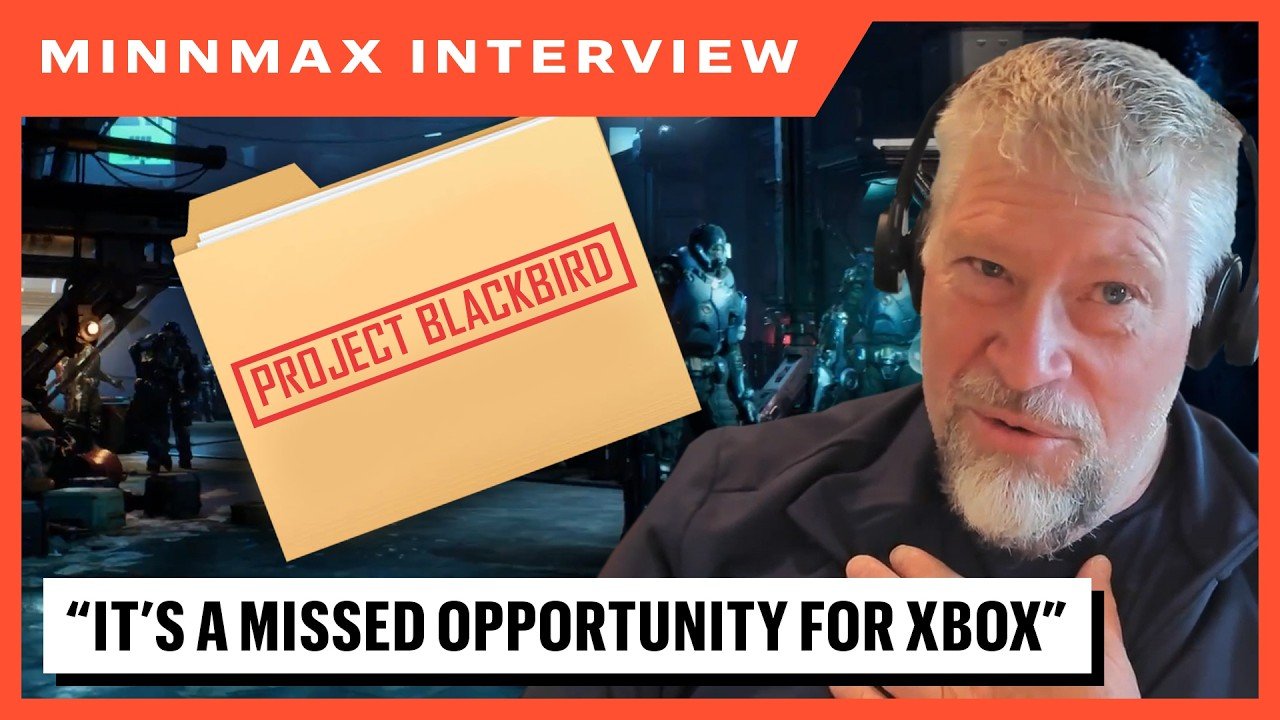
Firor, who founded ZeniMax Online Studios in 2007, recently opened up in an interview with MinnMax about the decision to kill the project. Despite his belief that Project Blackbird would have been a “fantastic game” and a significant missed opportunity for Bethesda, ZeniMax, and Xbox, he acknowledges the cold reality of corporate decision-making. “This is why making games is always a heartbreaking business,” Firor stated. “I didn’t agree with what happened, but I understood the reasoning behind it.”
The Problem with “Large” Numbers
When asked if market testing played a role in the cancellation, Firor suggested the issue was more systemic. He explained that ZeniMax Online Studios became a line item on a ledger. Because the studio’s financial figures were substantial, they became a target for intense corporate analysis. “Eventually, the industry just got to a point where it looked to the people there, and elsewhere in the industry, that that was just a very large bet and they needed to hedge their large bets,” he noted.
Development Hurdles and the Pandemic
Project Blackbird was in development for seven years, but Firor clarified that it wasn’t in full production for the duration of that timeline. The project spent time in early conceptual phases, determining the engine and core structure, before the onset of the COVID-19 pandemic stifled hiring efforts and slowed momentum. This context highlights that the project was not a seven-year failure of production, but rather a victim of timing and shifting corporate priorities.
Big Business vs. Creative Entertainment
Regarding rumors that former Xbox boss Phil Spencer was a fan of the project, Firor offered a knowing smile but maintained a professional perspective on his former employers. He emphasized that he holds no personal vendetta against the team at Xbox. Instead, he views the cancellation as a symptom of how public companies operate.
“A giant successful video game on the Microsoft level was frankly not that stimulating to them,” Firor explained. “They want a business that they can look at that has numbers that go up, reliably, every year by a certain amount. Entertainment like the video game industry just doesn’t work that way sometimes.”
A Recurring Industry Pattern
Firor drew parallels between the current state of Xbox and the acquisition-heavy eras of EA in 2008 or Activision in 2004. He noted that these cycles often involve companies acquiring studios only to later shutter projects that don’t fit a specific, forecastable financial model. “It’s a business and it’s terrible sometimes,” he said. “I don’t agree with some of the decisions, obviously, but the reasoning behind them makes sense on a ledger somewhere.”