
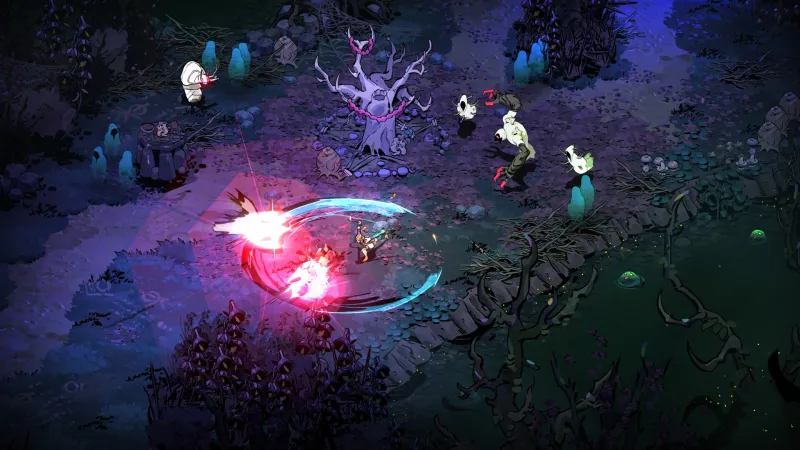
Supergiant Games has officially set a new gold standard for the roguelike genre with Hades II, a masterfully refined sequel that expands upon its predecessor’s legendary combat and narrative depth to deliver an even more thrilling experience.
The Evolution of a Perfect Gameplay Loop
For those new to the series, the Hades franchise defines the action-roguelike experience. Players navigate challenging runs, gathering powerful “boons” to transform their character into a formidable deity-slaying force. When a run inevitably ends in defeat, players return to their home base to engage with companions, unlock narrative beats, and utilize collected rewards to strengthen their next attempt. This brilliant design loop transforms failure into immediate gratification, ensuring the “just one more run” compulsion remains stronger than ever.
A Journey Into the Underworld
Set an undisclosed number of years after the events of the original title, Hades II shifts the focus to Melinoë, the younger sister of Zagreus and daughter of the god of the underworld. With the original cast imprisoned by the time-wielding titan Chronos, Melinoë must fight her way into the depths of Hell. This clever inversion of the first game’s premise allows Supergiant to recontextualize familiar locations and characters in a way that feels as fresh and exciting as the transition from The Legend of Zelda: Breath of the Wild to Tears of the Kingdom.
Combat Refined: The Power of Omega Moves
Melinoë wields six distinct new weapons, ranging from versatile magic wands to devastating battleaxes. The combat depth is further bolstered by the “omega” mechanic; by holding the attack button, players unleash enhanced, often transformative versions of standard moves. For instance, while a standard twin-blade attack executes a flurry of strikes, the omega version allows for tactical teleportation behind enemies for massive burst damage—a mechanic so intuitive it feels essential.
Discovery at Every Turn
Despite the sheer volume of content, the game’s pacing is impeccable. Even after 40 runs and encounters with every boss, the game continued to introduce new gods, boons, and weapon configurations. The title excels at incentivizing exploration through a constant stream of rewards—including arcana cards, familiars, and crafting materials—ensuring that every session feels productive, regardless of whether you succeed or fail.
Narrative Depth and Character-First Storytelling
The plot mirrors the gameplay’s structure, with each defeat unlocking new, seamless dialogue sequences. Hades II maintains the series’ commitment to character-first writing, allowing players to understand the motivations and personalities of the pantheon before learning their formal names or titles. The narrative, while linear in its progression, delivers a poignant take on generational trauma that is as unexpected as it is satisfying.
A Sensory Masterpiece
Visually and aurally, Hades II is a triumph. The character designs are striking and modern, and the game performs flawlessly across platforms. Darren Korb’s soundtrack is equally impressive, featuring brilliant reimaginings of themes from the first game. A standout moment is the dynamic musical boss fight, where the backing track shifts in real-time as musicians are removed from the battlefield.
Following sixteen months of early access, Hades II has emerged as an unforgettable experience. After 50 hours and 53 runs, the game remains deeply addictive, proving that Supergiant Games has not only met the high bar set by its predecessor but has managed to soar right over it. It is, quite simply, godlike.