
Consume Me is a poignant, hilarious, and occasionally visceral exploration of a teenage girl’s insecurities, transforming the heavy subject of eating disorders into a unique narrative-driven experience. By gamifying the life of its protagonist, Jenny, the title offers a rare, meta-commentary on the dangers of using rigid systems to measure the complexities of real-life mental health struggles.
A Warning Against Gamifying Real Life
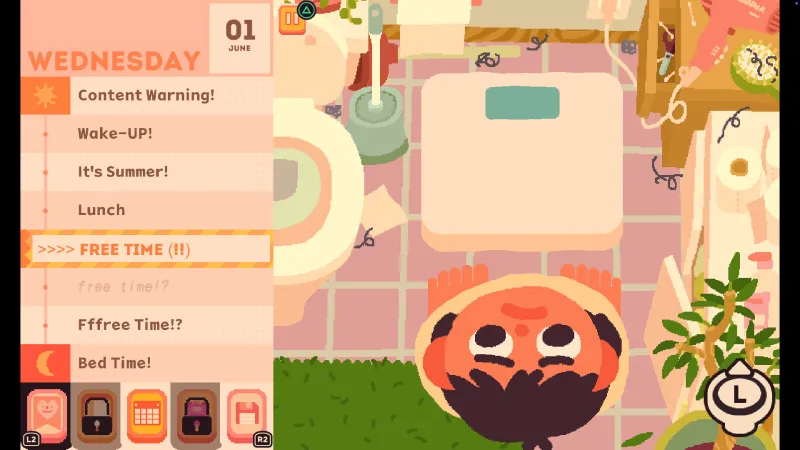
The game opens with a vital content warning, clarifying that Jenny’s dieting behavior—the core mechanic of the experience—is not a practice to be replicated. Based on the creator’s own life, the story follows Jenny as she prepares for her senior year of high school. Following a comment from her mother regarding her weight, Jenny begins to obsessively track her food intake and exercise, all while juggling the standard pressures of homework, money, and chores.
Most of these life activities are presented as microgames, reminiscent of WarioWare. These expressive, fast-paced challenges are charming and fun, making the act of managing toxic behaviors surprisingly engaging. The centerpiece is a Tetris-style lunch puzzle where players must fit food pieces onto a grid. Balancing “bite counts”—the game’s abstract take on calories—while trying to satisfy hunger meters creates a mechanical tension that mirrors the internal conflict of an eating disorder.
The Trap of the “Perfect” Routine
As the narrative progresses, the game masterfully illustrates how easily one can fall into a harmful spiral. A light lunch might save “bites,” but it drains energy, necessitating an energy drink that brings on headaches. To fix the headaches, one might eat chips, which then triggers a need for extra exercise to compensate. It is a brilliant, albeit distressing, trap that highlights how small, seemingly logical decisions can snowball into life-altering consequences.
Artistry and Emotional Resonance
The visual style of Consume Me is filled with personality, utilizing pixel art to create hyper-expressive character faces. Despite the serious subject matter, the tone is rarely dour. The dialogue is sharp and endearing, making it easy for players to become emotionally invested in Jenny’s life. Whether she is nervous about a boy or struggling to get out of bed, her journey feels deeply personal and authentic.
When the Narrative Stumbles
While the early hours are exceptional, the final chapter feels disjointed. The introduction of religion as a coping mechanism—complete with a musical prayer sequence—feels abrupt and disconnected from the established themes. Furthermore, the mechanics surrounding prayer, which function as a consequence-free energy and mood booster, contradict the game’s message about the futility of forcing the body to achieve unhealthy levels of productivity.
The conclusion also suffers from a lack of player agency. As the story reaches its inevitable, disastrous climax, the player is relegated to an interactive montage rather than an active participant in the resolution. While the game succeeds as a piece of artistic expression and a cautionary tale, the ending ultimately feels like a missed opportunity to fully process the growth Jenny experiences. Despite this underwhelming finale, Consume Me remains a creative, courageous, and memorable title that offers a perspective rarely seen in the medium.