
Following the tumultuous launch of Battlefield 2042, EA has successfully realigned its forces by establishing the unified Battlefield Studios—a collaboration between DICE, Criterion, Ripple Effect, and Motive. Battlefield 6 marks a triumphant return to the series’ roots, shedding operator-based gimmicks for a traditional role-based system, reintroducing a 64-player cap, and delivering a dedicated single-player campaign. While the game excels with destructible sandboxes, impactful gunplay, and a rewarding progression loop, it occasionally falters under the weight of its own narrative ambitions.
Cinematic Chaos and Immersive Warfare
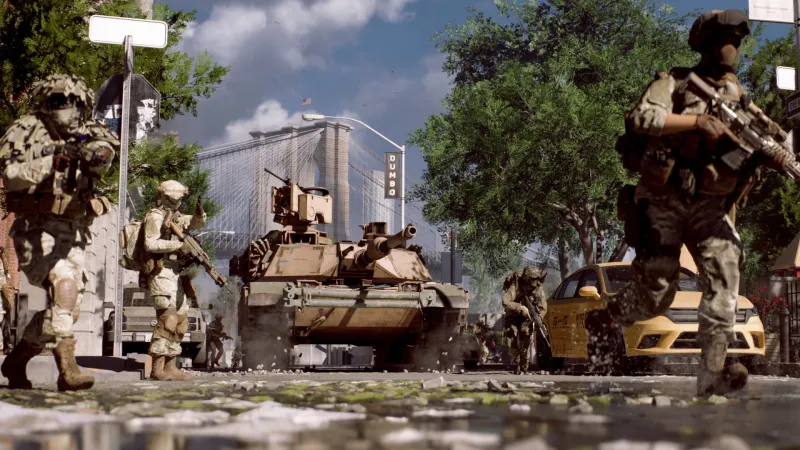
Battlefield 6 masterfully pushes the boundaries of sensory overload. Moments of high-octane gameplay are frequent and unforgettable, whether you are narrowly escaping an enemy squad, breaching a sniper’s nest, or witnessing a building collapse from a tank shell. The game’s ability to weave personal war stories—such as being pulled from rubble by a medic while bullets tear through the surrounding pavement—makes every firefight feel visceral and highly personalized.
A Global Battlefield: From Urban Sprawl to Desolate Peaks
Players are transported to diverse environments, from the shadow of the Brooklyn Bridge to the burning oil fields of Iran. The level design often shines, particularly in urban settings where multi-floored, destructible structures provide tactical depth. However, not all maps are created equal. While iconic cityscapes are breathtaking, zones like “Liberation Peak” and “Iberian Offensive” feel uninspired, relying on dreary, grayscale aesthetics and lackluster points of interest that fail to capture the same sense of scale.
The Kinesthetic Combat System
Movement and gunplay have been significantly refined through the new “Kinesthetic Combat System.” Features like grappling onto vehicles to avoid tedious traversal, tactical rolling to mitigate fall damage, and the ability to mount weapons on almost any surface add a layer of strategic fluidity. These mechanics force players to move away from mindless “run-and-gun” tactics, rewarding thoughtful positioning and tactical decision-making.
Modes Old and New
Fan-favorite modes like Conquest, Rush, and Breakthrough return with their classic, high-stakes intensity. The standout addition is “Escalation,” a dynamic territorial tug-of-war that forces teams toward a climactic final battle as objectives dwindle. While smaller-scale modes like Team Deathmatch and King of the Hill suffer slightly from inconsistent spawn points, the return of Portal—complete with robust scripting tools—promises to keep the community engaged with custom game modes and creative obstacle courses.
Overhauled Class Progression
The class system has been completely restructured, with each role—Assault, Engineer, Support, and Recon—offering unique traits, gadgets, and ultimate abilities. The introduction of “Training Paths” allows for deeper customization; for instance, the Engineer’s Anti-Armor path provides essential utility against vehicles, while the Recon’s Sniper path rewards precision play by preventing enemy revives. This depth of experimentation is a cornerstone of the game’s replayability.
Progression vs. Cosmetic Limitations
The grind is well-balanced, utilizing a mix of daily, weekly, and career challenges to unlock attachments and badges. However, the cosmetic department is surprisingly shallow. Players seeking to customize their soldiers will find the available skins repetitive and uninspired, often consisting of minor variations in camo that lack visual flair. Despite the high quality of gameplay, the aesthetic rewards for long-term play feel underwhelming.
A Narrative Misfire
The campaign represents the weakest aspect of the package. While the premise involves a high-stakes conflict against the private military company “Pax Armata,” the story is bogged down by wooden cutscenes, clunky dialogue, and a forgettable antagonist. Although the set-pieces are visually stunning, the narrative fails to connect on an emotional level, leaving the single-player experience feeling shallow compared to the grit and excitement found in the multiplayer modes.
Ultimately, Battlefield 6 succeeds by prioritizing the core pillars that made the franchise a titan of the genre. Despite a lackluster narrative and uninspired character cosmetics, the refined combat, map destruction, and strategic class system ensure that Battlefield 6 has successfully turned the tide, securing its place as a formidable entry in the series.