
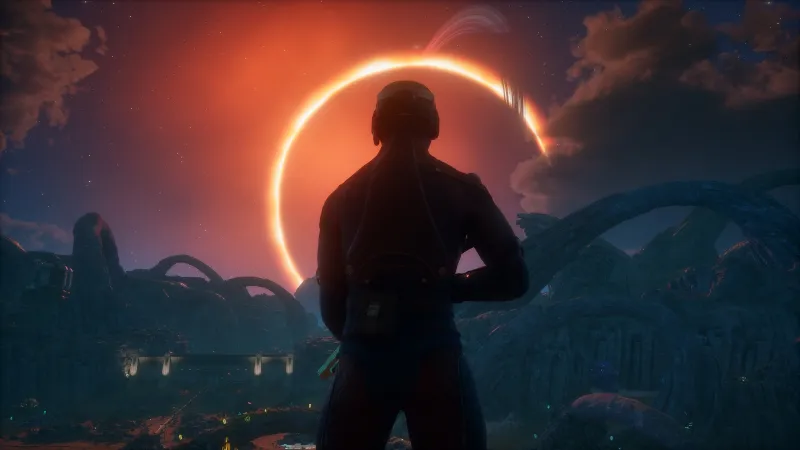
Obsidian Entertainment has returned with The Outer Worlds 2, a sprawling 30-hour space odyssey that refines the studio’s iconic RPG formula through deeper exploration, enhanced combat mechanics, and unparalleled narrative reflexivity. While the main story arc concludes with an anti-climactic finish, the game succeeds by offering players profound agency in shaping their path across the galaxy.
A Narrative of Personal Agency
Players assume the role of an Earth Directorate operative, with origins and traits customizable at the outset. The game launches into a high-stakes prologue filled with mystery and intergalactic rifts. While the central plot is polished, it lacks the sheer density found in the game’s side content. Ultimately, The Outer Worlds 2 proves that the experience lies in the journey, not just the destination.
Satire, Capitalism, and Deep World-Building
Set against the lush, tropical backdrop of Paradise Island on planet Eden, the game maintains a sharp, comedic tone that hides a biting critique of capitalism and religious institutions. Obsidian uses this setting to pose difficult questions about power dynamics, free markets, and the role of the working class. The writing is consistently top-tier, ensuring that every player’s moral compass is tested by the game’s twists and turns.
Combat Evolution and Tactical Depth
The first-person gunplay has received a massive overhaul, making the original game’s combat feel sluggish by comparison. The arsenal is diverse, ranging from plasma-modded rifles to unique science weapons like the leveling Moon Man machine gun. For those who prefer a rhythmic challenge, melee weapons—like a sword that triggers gospel-like praise breaks—offer a wild alternative to standard ballistics.
Enemy AI is notably aggressive and tactical, forcing players to constantly adapt their loadouts and companion abilities. Whether you are using Niles to draw aggro or Aza to unleash devastating flame attacks, combat requires more than just a trigger finger; it demands strategy and resource management.
The Power of Choice
While you can play as a straight shooter, the game shines when you utilize its deeper systems. Stealth and dialogue-driven approaches are viable, often allowing players to bypass boss fights entirely. The game feels uniquely tailored to your decisions, making every interaction—from companion quests to simple errands—feel consequential to your mission to save Arcadia.
Companion Dynamics and The Flaw System
Companion quests are vital for character development and provide essential mod kits that alter how your team performs in battle. These quests allow you to build a balanced party, such as pairing a tank like Tristan with a stealthy assassin like Aza. Furthermore, the returning “Flaws” feature adds a meta-layer of reactivity, punishing or rewarding specific playstyles in ways that make the game feel like it is constantly observing your actions.
Technical Performance and Presentation
Visually, The Outer Worlds 2 is Obsidian’s most vibrant title to date. The sparse musical score is expertly supplemented by a brilliant in-game radio, featuring propaganda-filled songs and humorous commercials. On the PlayStation 5, the game performs exceptionally well, with the PS5 Pro offering a smooth 60 FPS experience at 1620p resolution, despite a few minor, persistent bugs.
In the end, The Outer Worlds 2 does not reinvent the RPG genre, but it perfects the framework Obsidian has been building for years. By addressing the limitations of its predecessor and doubling down on player choice, it stands as the studio’s most reflexive and compelling adventure yet.