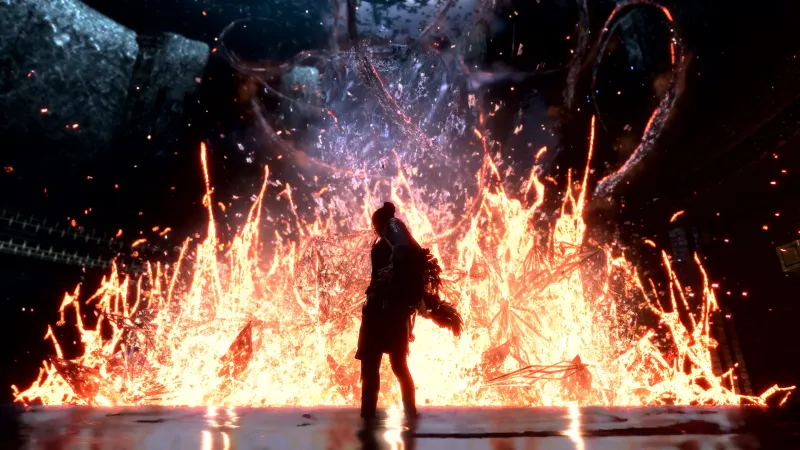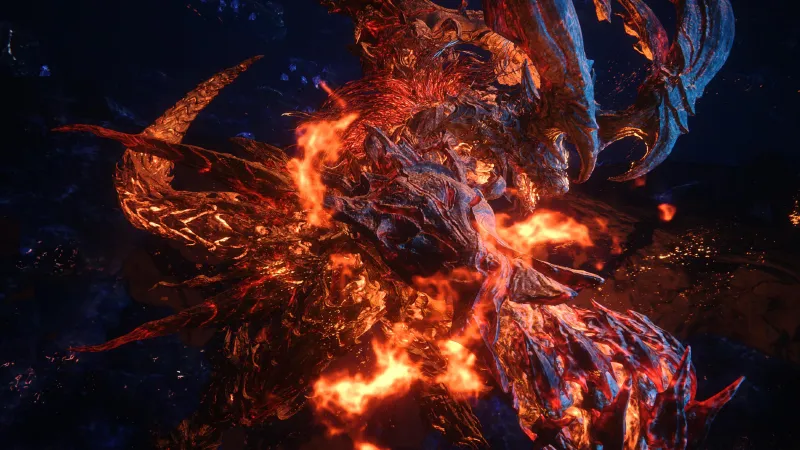

Developer Tarsier Studios, renowned for the Little Nightmares series, returns with Reanimal—a game that promises a grand horror experience but ultimately delivers a hollow, uninspired journey through a haunting island. Despite the high expectations surrounding the project, the title fails to capture the tension, puzzle-solving, and genuine scares that defined the studio’s previous work, resulting in a diluted experience that feels more like a theme park ride than an immersive nightmare.
A Solid Structure Without Substance
The game’s premise is straightforward: a brother-sister duo traverses a treacherous island to rescue missing friends. The structural approach of using a boat to access different zones is one of the few design choices that actually works, providing a satisfying sense of progression as players complete missions and return to their vessel. However, this is where the positives largely end.

The intentional de-emphasis on environmental puzzles leaves a void that the game never successfully fills. With only about a dozen puzzles in the entire experience, Reanimal lacks the mechanical depth to justify its existence as an adventure game. The production values are high, making for striking screenshots, but the moment-to-moment gameplay—walking, running, and hiding—feels like moving through a static, superficial set rather than a hostile, living world.
The Illusion of Being Hunted
One of the most glaring issues is the lack of threat. Enemies rarely pose a genuine danger, and the stealth mechanics are remarkably forgiving. I never felt truly hunted; instead, I felt like a visitor walking in and out of a designated “hunting ground.” The AI rarely attempts to track the player, turning tense encounters into a series of waiting games rather than high-stakes chases.

The game provides larger environments than previous Tarsier titles, but these spaces are criminally underutilized. Whether it’s an abandoned playground or a wide-open field, the world sells spectacle but fails to deliver on gameplay. Exploration often feels like a chore, with collectibles and secrets rarely offering a satisfying payoff for the time invested in searching.
Predictable Design and Wasted Potential
Good horror relies on anticipation and the subversion of expectations. Reanimal, conversely, is painfully predictable. Hazards are telegraphed long before they occur, stripping away any sense of dread. Even when the game attempts to set up a striking visual moment, it rarely follows through with meaningful gameplay.

For instance, an encounter in a laundromat with the “Sniffer” enemy highlights the game’s flawed design. The solution often involves simple back-and-forth movement or waiting for an animation to finish, rather than clever evasion. At one point, the enemy even ceases to function as a threat, appearing on a tricycle in a sequence that feels more like a poorly timed performance than a terrifying pursuit.
A Fragmented Experience
The game’s design choices frequently discourage curiosity. Because the environment fails to distinguish between the critical path and optional detours, players are forced to waste time opening doors and checking empty rooms, only to be met with long, repetitive animations. This lack of visual hierarchy makes the already tedious exploration feel even more unrewarding.

While basic combat mechanics are introduced, they serve as nothing more than “busywork” to distract from the lack of core engagement. Even the co-op mode, which allows a second player to join the journey, fails to elevate the experience, as the discovery of hidden items provides no real sense of accomplishment.

Final Thoughts: A Missed Opportunity
There is a brief glimmer of quality in the game’s final hour, where sequences finally force the player to balance the roles of hunter and hunted. This conclusion provides some much-needed narrative clarity, but it is too little, too late. These fleeting moments of competence only serve to highlight how much of the preceding journey feels unmotivated and unamused.

Reanimal is a visually polished product that lacks the soul of its predecessors. It is an experience that values spectacle over substance, leaving players with a hollow, frustrating, and ultimately forgettable adventure.