
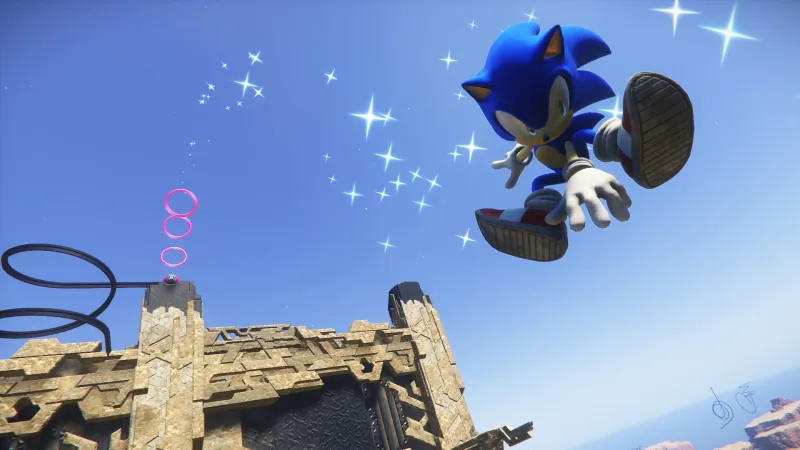
Sonic Frontiers successfully bridges the gap between the franchise’s linear roots and a new “open-zone” future, delivering a transformative experience for Sega’s iconic mascot. By blending expansive Starfall Islands exploration with traditional, high-speed Cyber Space stages, the game manages to revitalize the series despite some noticeable technical growing pains.
Mastering the Open-Zone Momentum
Navigating the open zones is a consistently joyful experience. Over the course of a 30-hour playthrough, Sonic’s movement remains fluid and responsive across diverse biomes, from lush fields to desert straights. The islands function as oversized playgrounds where grinding, boosting, and bouncing feel inherently satisfying. The game excels when it encourages chaining these traversal mechanics together, rewarding players with that classic, high-octane 3D gameplay feel.
The standout addition to Sonic’s toolkit is the Cyloop, a versatile blue trail activated at the touch of a button. While it serves a tactical purpose in combat—stripping enemy armor or stunning foes—its true strength lies in environmental interaction. Whether you are spawning infinite rings or solving puzzles, the Cyloop is a clever mechanic, though its implementation occasionally feels forced in certain areas of the world.
Technical Hurdles and World Design
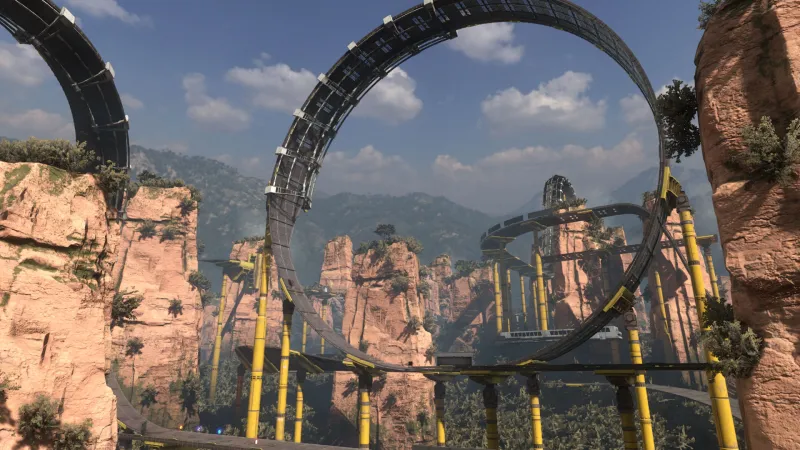
Despite the fun factor, the open-zone design is not without its flaws. In-world obstacle courses frequently suffer from poor optimization, often launching players in unintended directions via misplaced dash panels. This frustration is compounded by aggressive pop-in issues, which make navigating platforms and rails unnecessarily difficult. Furthermore, the world design lacks the cohesion found in modern open-world benchmarks, occasionally trapping players in rigid 2D segments or leading them into confusing dead-ends that disrupt the flow of exploration.
Deepening Combat and Boss Encounters
Sonic Frontiers introduces the most robust combat system in the series’ history. What begins as simple button-mashing quickly evolves into a strategic affair, requiring players to utilize skill trees and timing to counter and block tougher enemies. The inclusion of mini-boss “Guardians” provides some of the game’s most engaging moments, offering unique tactical challenges ranging from high-speed chases to complex, arena-based bullet-hell scenarios.
Defeating these Guardians yields Cyber Space Gears, the keys to accessing linear 3D levels. These bite-sized stages are masterclasses in speedrunning, though the difficulty balance for S-Rank times can be wildly inconsistent, sometimes demanding near-perfection while other times feeling trivial.
A Mature Narrative and Epic Scale
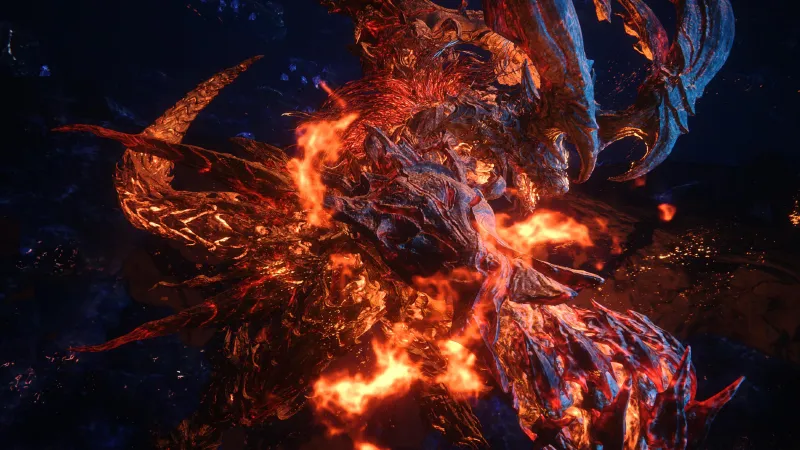
The climax of each island features a massive Titan boss battle. Playing as Super Sonic, these encounters shift the focus from traditional combat to a race against the clock. While the projectile spam can be irritating, the cinematic presentation—paired with a stellar, anime-inspired soundtrack—creates truly memorable, high-stakes spectacles.
Contrasting this bombast is a surprisingly solitary and contemplative tone. The narrative, which explores the tragic history of a mysterious ancient species, represents the most mature storytelling in the franchise. Longtime fans will appreciate the deep cuts and callbacks to titles ranging from Sonic 3 to Sonic Forces, including a particularly heartfelt conversation about personal growth that stands as a highlight for the series.
While Sonic Frontiers is rough around the edges, it stands as the most impressive 3D Sonic title in years. It is an admirable first attempt at an open-zone formula that, while not yet perfected, successfully points the franchise toward a bright and exciting new direction.