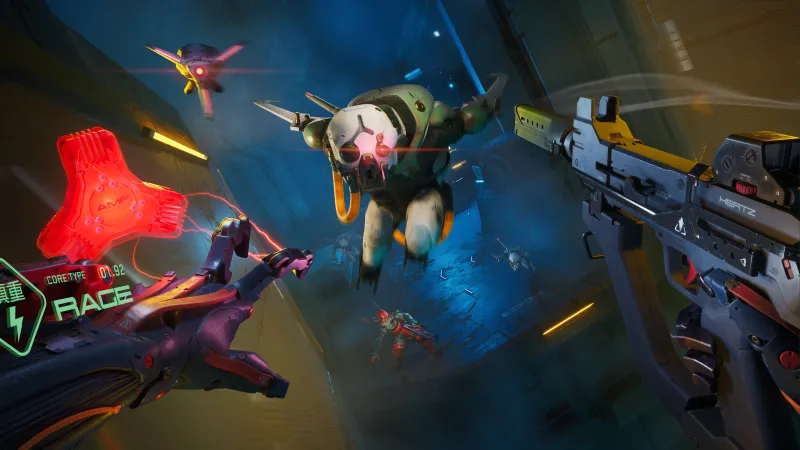

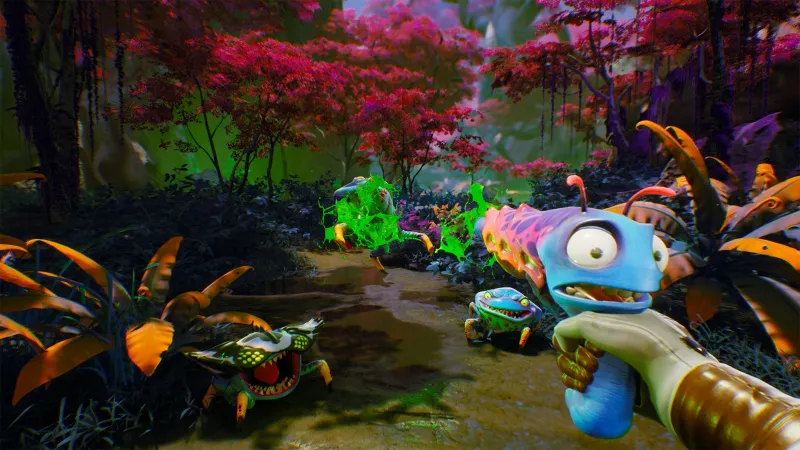
High on Life, the intergalactic bounty hunter shooter from Rick and Morty co-creator Justin Roiland, fails to deliver a cohesive experience, struggling with both repetitive, grating humor and uninspired gameplay mechanics that ultimately leave the player wanting more.
A Comedy That Misses the Mark
Fans of Roiland’s previous work will recognize the relentlessly over-the-top, adult-oriented comedy style, but in High on Life, the execution falls flat. As a teenager tasked with saving humanity from an alien invasion, you wield a collection of sentient, talking guns voiced by comedians like JB Smoove and Tim Robinson. Unfortunately, the dialogue is relentless to the point of annoyance. The primary weapon, Kenny, is particularly guilty of offering constant, nonsensical banter—often complaining about inactivity immediately after being used in combat. While a menu slider allows players to reduce weapon chatter, the core issue remains: the writing simply isn’t funny.
The game attempts to lean into edgy, expletive-laden humor, but it relies on repeating the same gags until they lose any potential impact. Characters feel like one-dimensional caricatures, and the game’s meta-commentary on industry tropes feels hollow and hypocritical, as it frequently commits the same design “sins” it attempts to mock.
Bright Spots in the Chaos
Despite the overwhelming barrage of unfunny dialogue, there are rare moments of genuine humor. The banter between a family of construction workers, specific visual gags involving real-world restaurant references, and various celebrity cameos provide brief flashes of entertainment. Furthermore, the use of special discs to summon diorama-like scenarios serves as a highlight, showcasing the potential that the game’s writing occasionally hints at but fails to sustain.
Gameplay: Passable but Uninspired
The combat loop in High on Life is functional but lacks the satisfying “snappiness” found in genre staples. While melee executions mimic the glory kills of Doom, they lack the same impact. The arsenal of living weapons does offer some variety, such as Gus—a shotgun that fires ricocheting discs—but the lack of enemy variety makes most encounters feel like repetitive busy work. Boss fights, too, struggle with balance, often leading to frustrating, cheap deaths rather than challenging tests of skill.
Exploration and Technical Hurdles
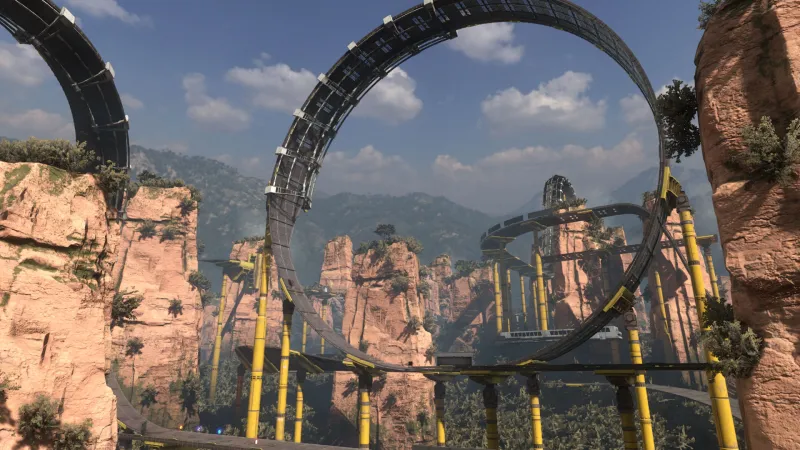
Outside of combat, players navigate large, Metroid-style planetary hubs. While these areas are visually striking, they feel sterile and lack necessary quality-of-life features like a map or compass. Navigating these zones to locate shops or objectives often feels like a chore, leading to unnecessary backtracking and confusion.
Compounding these design issues are frequent technical shortcomings. During play, I encountered enemies freezing, geometry glitches, and broken interaction prompts that forced multiple game resets. While post-launch patches have addressed some stability issues, the experience remains marred by technical inconsistencies.
Ultimately, High on Life is a reminder that a creative concept does not automatically translate to a quality game. While there are glimmers of potential that could be refined in a sequel, the current iteration is a lackluster shooter that mistakes constant noise for meaningful entertainment.