
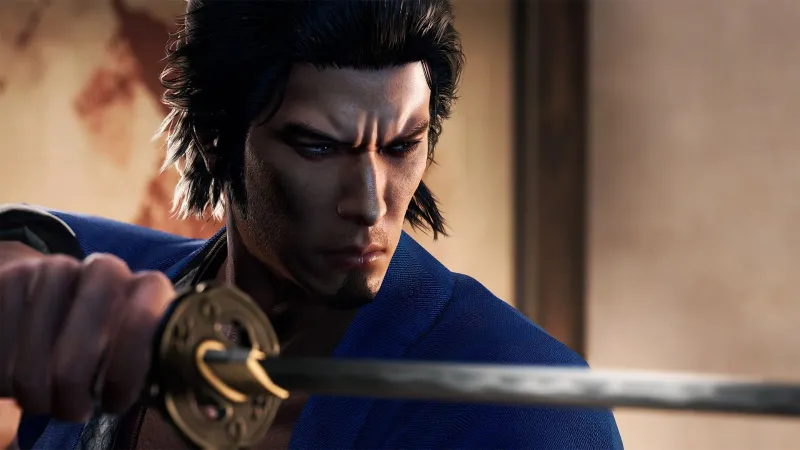
Like a Dragon: Ishin! is a bold resurrection of the 2014 Japanese exclusive Ryu Ga Gotoku: Ishin. Despite being built on a decade-old foundation, this remake stands as one of the most compelling entries in developer Ryu Ga Gotoku’s (RGG) extensive portfolio, balancing historical drama with the studio’s signature flair.
A Gripping Historical Drama
Set in the 1860s during the twilight of Japan’s Edo period, the game casts you as the historical figure Sakamoto Ryoma. Operating under the alias Saitō Hajime, Ryoma infiltrates the Shinsengumi police force in Kyoto to track down his adopted father’s murderer. What begins as a personal quest for vengeance quickly spirals into a high-stakes political thriller that reshapes the future of the nation.
The narrative succeeds largely due to its casting. By utilizing the faces and personalities of iconic Yakuza characters for historical roles, the game creates an immediate emotional connection. Seeing familiar faces like Kazuma Kiryu as Ryoma, alongside Goro Majima and Taiga Saejima, makes the complex political web easier to navigate. With stellar performances from Takaya Kuroda and a returning cast of legends from Yakuza 0, the cutscenes are arguably the best in the studio’s history.
Complexity and Scope
While the story is gripping, it can be overwhelming. Keeping track of the shifting alliances and historical context requires significant attention, as the game assumes a baseline understanding of Japanese history. Furthermore, the finale takes a divisive, meta-narrative turn that may not resonate with every player.
Living in 1860s Kyoto
The historical setting provides one of the series’ most immersive open worlds. Kyo (modern-day Kyoto) is rendered with meticulous detail, from bustling shopping districts to quiet, winding alleys. However, the game’s aggressive approach to substories can disrupt the atmosphere. Sidequests often trigger automatically when you pass a mission-giver, which can lead to a frustrating string of interruptions when you are simply trying to navigate the city.
That said, the side content is undeniably charming. The slice-of-life minigames—particularly the homesteading sequences where you manage a house with Haruka—are a highlight, offering a peaceful respite from the intensity of the main plot.
Mastering the Blade and Beyond
Combat returns to the real-time action roots of the series, moving away from the turn-based mechanics of Yakuza: Like a Dragon. Players can fluidly switch between four distinct fighting styles: the fast-paced sword and gun stance, a heavy-hitting swordsman style, a long-range gun stance, and hand-to-hand combat. This versatility makes encounters deeply satisfying, though the camera can occasionally struggle in tight, enclosed spaces.
The experience is further enhanced by a card-based special move system. By recruiting soldiers to the Shinsengumi—often through repetitive dungeon-crawling—you can equip up to 16 abilities that provide everything from massive healing to screen-clearing lightning attacks. When combined with the series’ signature cinematic “heat moves,” the combat becomes a spectacle of strategy and carnage.
Like a Dragon: Ishin! is an essential spin-off that justifies its long-awaited arrival in the West. While it occasionally stumbles under the weight of its own ambition, the combination of a gripping story, deep combat, and world-class presentation makes it a standout title for fans of the franchise.