
Bithell Games attempts to evolve the Tron franchise with Tron: Identity, a visual novel that trades high-speed light cycle action for grid-based mystery, though it ultimately struggles to leave a lasting impact.
A New Perspective on the Grid
Taking established fictional universes in new directions is a goal worth pursuing. Too often, licensed titles cling too tightly to familiar characters or scenarios, stifling the growth of beloved frameworks. Tron: Identity seeks to break this cycle by introducing a visual novel format infused with light puzzle gameplay. While the novelty of this approach is commendable, the final product falls short of its potential in several critical areas.
Detective Work Without the Deduction
The game plays out like a classic noir detective story, transposed into a digital realm where investigators inhabit a computer world, carry memory-filled discs, and navigate pulsing neon landscapes. Tasked with solving a mysterious explosion and potential theft within “the Grid,” you interact with various “Programs.” Your dialogue choices dictate how these characters perceive you and influence their willingness to cooperate, all presented through text-heavy sequences set against static character art.
While the limited scope and narrative constraints are refreshing, the detective experience feels hollow. Information is handed to the player at regular intervals rather than being discovered through active investigation. Consequently, the big revelations feel like forced plot twists rather than the satisfying result of piecing together clues.
Atmosphere vs. Gameplay Mechanics
Despite the lack of mechanical depth in the investigation, the writing and dialogue successfully build an atmospheric narrative that breathes life into the static visuals. Bithell Games offers a unique take on the Tron universe, introducing interesting twists to the established lore. The branching decision-making trees are a highlight, allowing players to shape the narrative and determine the fates of various characters.
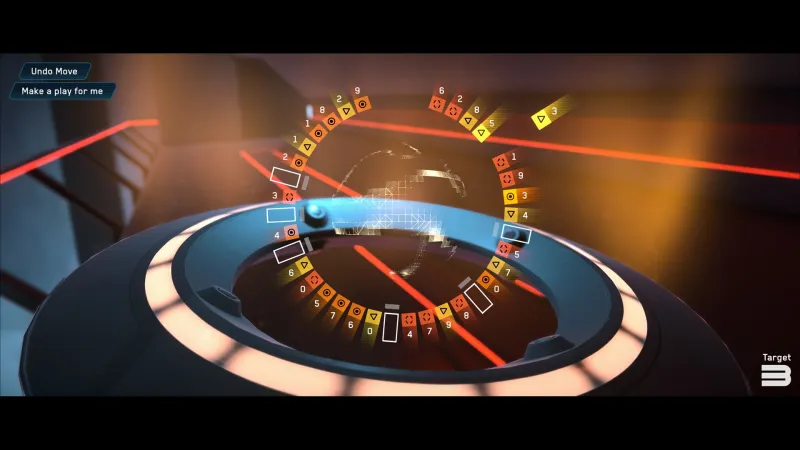
The gameplay is punctuated by a recurring puzzle mechanic where players repair damaged memories by matching numbers and card suits. This system feels repetitive and often relies on trial and error rather than skill. Fortunately, the inclusion of an option to skip these puzzles during subsequent playthroughs is a welcome quality-of-life feature.
Themes of Memory and Purpose
Throughout its concise runtime, Tron: Identity tackles heavy philosophical themes, including the nature of fate, the significance of memory, and the struggle for purpose in the face of extinction. While the game avoids offering definitive answers to these complex questions, it succeeds in creating a space where diverse characters can contemplate these issues during a high-stakes crisis.
Ultimately, while the game remains authentic to the Tron aesthetic and introduces intriguing concepts, it fails to fully engross the player. It is a title that fans of the franchise will appreciate for its world-building, but it struggles to foster a deep emotional connection to the Programs and their digital plight.