
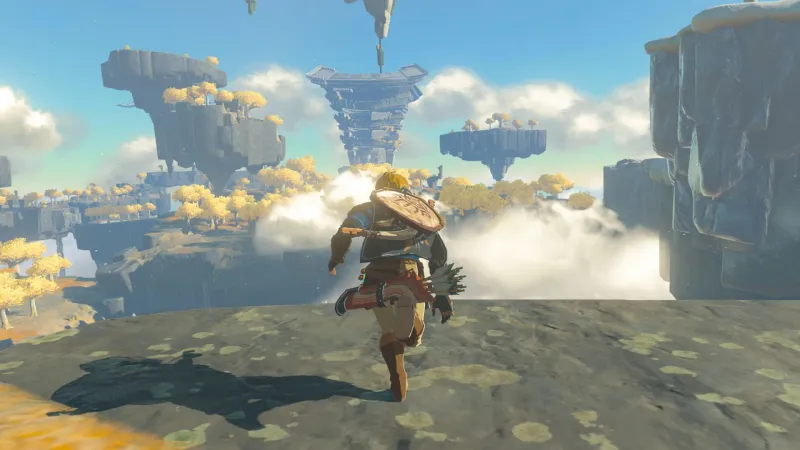
The Legend of Zelda: Tears of the Kingdom successfully defies the impossible pressure of following up Breath of the Wild, a title widely regarded as the pinnacle of modern game design. By revisiting the iconic landscape of Hyrule through a fresh lens, Nintendo delivers a sequel that prioritizes player agency, offering a brilliant adventure that feels both hauntingly familiar and entirely new.
A Familiar World Reimagined
While the game primarily unfolds across the familiar terrain of Breath of the Wild’s Hyrule, it avoids the trap of feeling like a repetitive experience. The passage of time has transformed the kingdom, much like returning to a childhood home after years away: you recognize the landmarks, but the context has shifted. Exploration is further expanded by the addition of vast, thrill-inducing islands in the sky and dark, intimidating cave networks, providing diverse environments to match every player’s mood.
The Power of Innovation: Link’s New Abilities
The core of the experience lies in Link’s new suite of abilities, which fundamentally alter how players interact with the world. The Fuse mechanic is a standout, turning every discarded rock, plant, or Zonai component into a valuable resource. It encourages constant experimentation, rewarding players for asking “what if?” as they craft unique weapons and shields. Coupled with an improved item degradation system and quality-of-life upgrades, the act of scavenging becomes an essential and satisfying part of the gameplay loop.
Movement is equally revolutionized by Ascend, which allows Link to bypass ceilings with ease, and Recall, a time-manipulation tool that consistently surprises with its versatility. However, the true star is Ultrahand. While the learning curve for building complex contraptions—from simple bridges to intricate flying machines—is steep, the mechanic is so intuitive that it borders on addictive. It is a rare system that stays with players long after they put the controller down, sparking the same creative obsession once seen in titles like Portal.
A Compelling Narrative and Refined Structure
The narrative in Tears of the Kingdom is a marked improvement, offering an engaging premise that respects the events of its predecessor. It provides long-awaited answers regarding Zelda’s journey and allows players to reconnect with familiar characters to see how their lives have evolved. The story stays true to the classic Zelda spirit while delivering exciting new turns that keep players invested until the end.
Dungeons, Combat, and the Evolution of Hyrule
Structurally, the game retains the satisfying combat and puzzle-heavy Shrines of the first entry but introduces traditional, more accessible dungeons. These new dungeons feature distinct bosses that require players to master their newly acquired abilities for victory. By replacing the original Runes with a entirely new set of tools, the game forces players to rethink every encounter, from traversal to combat.
While the initial sense of discovery from Breath of the Wild is naturally different here, Tears of the Kingdom compensates by offering a deeper, more granular level of engagement. It is a rare sequel that proves you can go home again—provided you bring the right tools to reinvent it.