
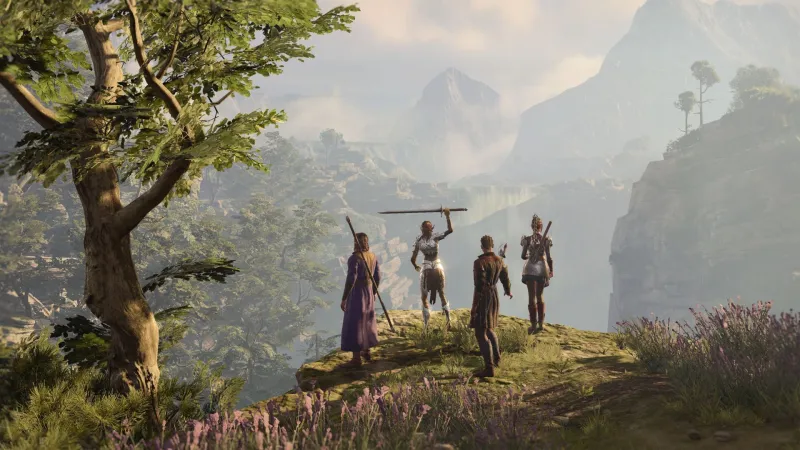
Baldur’s Gate 3 is a deeply human narrative disguised as a high-fantasy epic. Despite its surface-level focus on space lizards and parasitic brain worms, the game is fundamentally a story about broken individuals navigating life, seeking redemption, or choosing paths of absolute destruction. Through intricate writing and a profound commitment to player experimentation, Larian Studios has crafted one of the most unforgettable RPG experiences in gaming history.
Dungeons & Dragons Complexity, Perfectly Streamlined
The game successfully translates the depth of Dungeons & Dragons into a top-down RPG format without sacrificing its tactical soul. By streamlining dice rolls and ability checks, the game ensures players focus on meaningful decisions rather than manual calculations. While it lacks a human Dungeon Master to mediate the chaos, it compensates with a staggering array of choices that send ripples throughout the world, providing immense freedom during turn-based combat encounters.
The Quest for a Cure
The adventure begins with a classic premise: you and your potential companions have been implanted with Mind Flayer tadpoles and must find a cure before you transform into Ilithid thralls. While the overarching threat of an “Evil Entity” initially feels like a standard fantasy trope, the narrative consistently defies expectations. By intertwining the main plot with the devastatingly personal stories of your companions, the game creates an immersive, emotionally resonant setting that rarely feels stagnant.
A World of Unpredictable Nightmares
Progression in Baldur’s Gate 3 is defined by navigating a web of social prejudices and unexpected dangers. Whether you are dealing with demons posing as holy soldiers or cultists obsessed with pain, the game excels at forcing players to think, fight, or psychic-blast their way through bizarre situations. Even at its most deranged, the world remains grounded, offering a gritty, unromanticized look at life in a land defined by strife.
Dark Humor and Lasting Consequences
Larian Studios strikes a delicate balance between high-stakes drama and dark, grotesque humor. A prime example is an early quest involving a hag and a distraught widow, where the player can choose to help the widow or manipulate the situation to turn her undead husband into a permanent servant. This blend of morality—ranging from heroic to monstrous—ensures that quests linger in the player’s mind long after completion. Furthermore, the continuity of these events, often culminating in the city of Baldur’s Gate itself, adds a rich layer of consequence to every action taken.
Room for Improvement: The Racial Determinism Trap
While the character work is largely stellar, a few cracks appear in the game’s social landscape. While some devils are given nuance, certain groups like goblins and Drow are often relegated to two-dimensional villainy. This lack of reflection stands out in a title that otherwise champions complexity, occasionally perpetuating the more controversial aspects of Dungeons & Dragons’ traditional racial determinism.
Tactical Freedom and Combat Design
Combat in Baldur’s Gate 3 is a mix of ingenious design and high-density mechanics. It automates the tabletop experience, which is a boon for veterans, though newcomers may find the lack of an in-depth tutorial for the first act an uphill struggle. However, the sheer amount of tactical freedom is unparalleled. Players can soften foes with acid, manipulate the environment to gain high-ground advantages, or simply shove a boss into a pit mid-monologue. The ability to improvise solutions makes every victory feel uniquely earned.
Ultimately, Baldur’s Gate 3 is a triumph of design and player agency. Even after completing a lengthy first playthrough, the depth of the world remains inviting, encouraging players to return and push the boundaries of what is possible in this exceptional fantasy landscape.