
Starfield delivers a massive, galaxy-spanning RPG experience that pushes Bethesda’s signature exploration formula to its absolute limit, offering hundreds of hours of content within a rich, imaginative sci-fi setting. While the sheer scale of the game is its greatest strength, it occasionally struggles with inconsistent pacing and mechanical friction, yet remains a compelling playground for players seeking a deep, long-term space adventure.
A Journey into the Cosmic Unknown
Your journey begins as a humble space miner, but a chance encounter with a mysterious, buried artifact thrusts you into a grand cosmic conspiracy. This catalyst introduces you to a tight-knit group of explorers dedicated to uncovering the secrets of the universe, opening the door to a sprawling network of human colonies established following the exodus from Earth.
Rich Storytelling and Faction Diversity
The dialogue and narrative depth are top-tier, featuring a cast of distinct personalities and engaging interactions. The game excels in its variety, offering independent storylines for different factions and corporations. Whether you are hunting xenoweapons, infiltrating pirate fleets, or acting as a frontier lawman, the experience remains fresh. This is further bolstered by emergent gameplay opportunities, such as establishing mining outposts, surveying uncharted planets, customizing your home, or building relationships with your companions.
The Double-Edged Sword of Endless Distraction
Starfield is a game defined by its distractions, which is both a blessing and a curse. I found the most satisfaction when I followed the game’s various threads organically. However, certain tasks—like exploring alien temples or clearing out outlaw bases—can become repetitive. Furthermore, the constant “ping-ponging” between mission-givers and distant star systems can feel tedious, even with fast travel, as the flow of quests is occasionally interrupted by excessive navigation.
Immersion and the Joy of Exploration
The core of Starfield’s appeal lies in the genuine thrill of discovery. Landing on a new planet to find unknown megafauna or boarding a derelict space station provides a sense of wonder that few games replicate. These moments are elevated by high-quality presentation, stunning visual landscapes, and a hauntingly beautiful musical score that perfectly captures the isolation and grandeur of space.
UI Hurdles and Navigation
Navigating Starfield can be an obtuse experience. The user interface and map systems are often clunky, making basic tasks—such as selling inventory, modifying ships, or managing crew—feel unnecessarily complex. Relying on constant menu navigation to travel between systems hampers the immersion, making the game feel like a vehicle with an unintuitive dashboard. Once you master these systems, however, the journey becomes much smoother.
Combat Mechanics: Highs and Lows
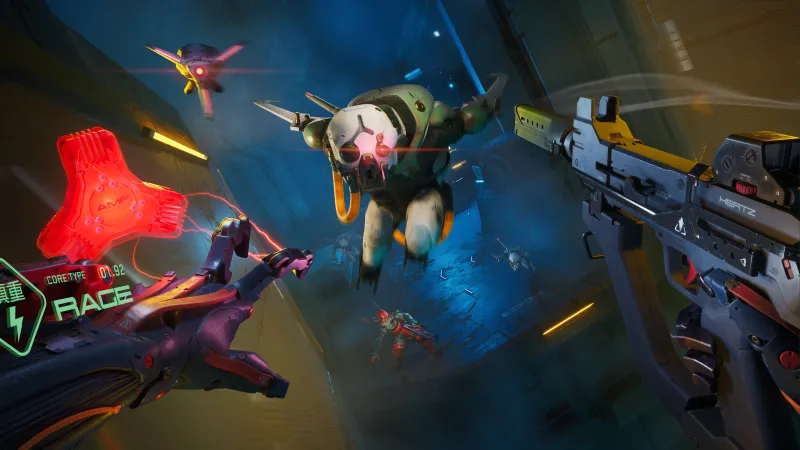
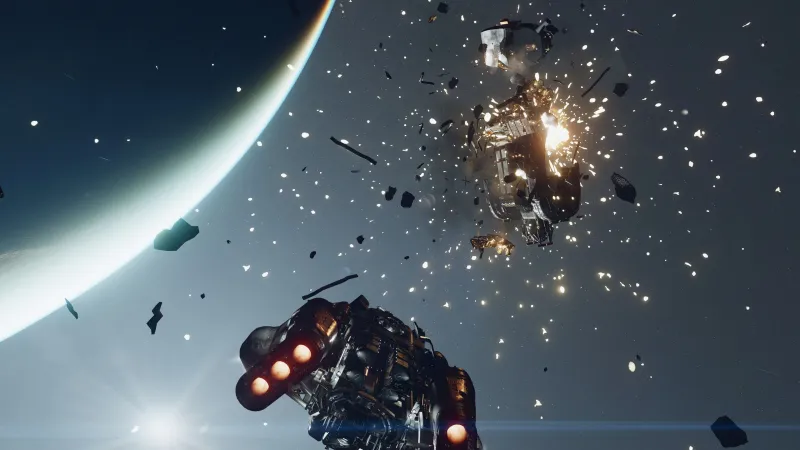
Ground combat is a pillar of the gameplay loop, featuring a diverse arsenal ranging from futuristic laser rifles to classic Western-style shotguns. While movement is fluid thanks to jet boost packs, the gunplay itself often feels stiff, and enemy AI frequently lacks the tactical complexity required to create genuine tension. Similarly, while ship-to-ship combat is an exciting addition to the formula, the difficulty spikes are inconsistent, often resulting in battles that are either trivial or impossibly lopsided.
A Universe Worth Discovering
Falling in love with Starfield requires patience, as the game demands time to find your footing in its vast, complex systems. Despite its flaws and the occasional mechanical frustration, the game’s sheer ambition, the breadth of its interwoven stories, and the originality of its science-fiction universe make it a journey that is fundamentally worth taking.