
Nintendo’s Tomodachi Life: Living the Dream revives the iconic 3DS life-sim franchise with upgraded technology and heightened absurdity, yet it fails to capture the series’ potential by stripping away the essential social sharing features that once fueled its viral success.
A Sandbox of Unpredictable Chaos
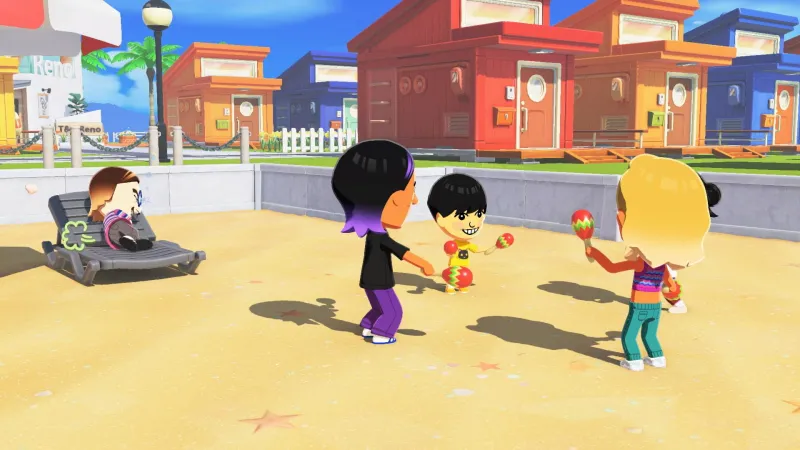
The core of the experience remains a passive, highly customizable sandbox. Players populate an island with Mii characters, defining their appearance, voices, and personalities. Whether you choose to recreate friends, family, or bizarre combinations of celebrities and fictional characters, the game’s text-to-voice engine brings them to life in unsettlingly hilarious ways. Because every island is uniquely generated, no two players experience the same narrative.
The Loop: From Delight to Repetition
Early hours are filled with genuine surprises, from seeing Shigeru Miyamoto dine with Pedro Pascal to watching iconic characters engage in random, quirky interactions. However, the charm begins to wane around the 30-hour mark. The scenarios and cutscenes, while initially delightful, eventually fall into a predictable loop. What was once a daily must-play experience quickly shifts into a chore performed out of obligation rather than genuine excitement.
Customization and Micro-Management
Players can influence island dynamics through custom text fields, creating a personalized lingo that Miis use in conversations. Beyond social engineering, the gameplay relies on fulfilling Mii requests, gifting items, and playing simple microgames—such as “Red Light, Green Light” or coin flips. While these provide small rewards and unlock new amenities or clothing designs, they remain shallow additions that do not anchor the experience in any meaningful way.
The Fatal Flaw: A Social Game Without Sharing
The most glaring issue is Nintendo’s decision to block all social sharing. Despite the game being built entirely around “oddball moments” perfect for social media, players cannot share Mii QR codes, nor can they use the Switch’s native capture functionality for screenshots or videos. By removing the ability to document and share the bizarre, funny situations that define Tomodachi Life, Nintendo has effectively neutered the game’s greatest strength.
Ultimately, Tomodachi Life: Living the Dream is a unique experiment that relies heavily on the player’s own creativity. Without the safety net of social features to bridge the gap between players, the experience lacks the necessary depth to sustain interest once the initial novelty of the daily comedy routine wears off.