
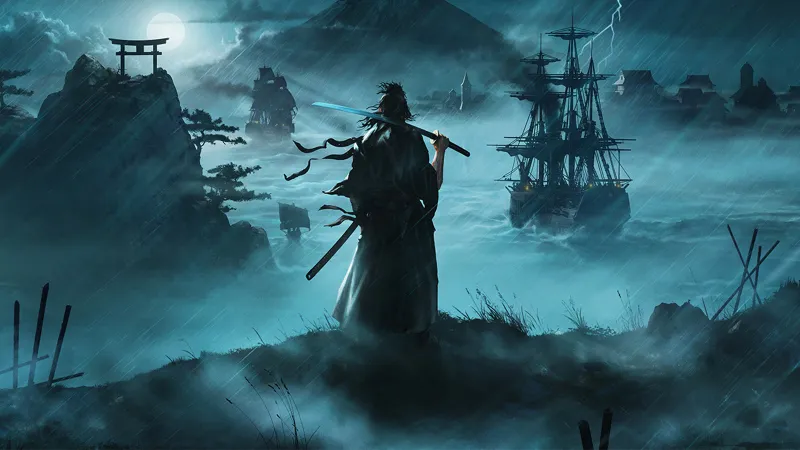
Team Ninja has ventured into the open-world genre with Rise of the Rōnin, a 19th-century Japanese historical epic that struggles to balance its ambitious scope with repetitive gameplay. While the studio is renowned for tightly designed action titles, this transition into a sprawling world of political upheaval often feels like a standard, uninspired exercise in open-world design.
A World Filled with Busywork
The map is densely packed with activities, yet few feel meaningful. Players are tasked with collecting cats, gathering foreign books, and capturing photographs—tasks that quickly devolve from pleasant distractions into tedious busywork. These repetitive objectives make one question why the developers felt the need to adopt an open-world format at all, as the world often feels like a collection of chores rather than a living, breathing environment.
Combat: A Parry-Heavy Loop
As a spiritual successor to Nioh and Wo-Long: Fallen Dynasty, the game relies heavily on Team Ninja’s signature parry-centric combat. While executing a perfect parry sequence against an aggressive enemy remains inherently satisfying, the game forces this mechanic upon the player for almost every encounter. The lack of combat diversity becomes glaring; despite various stances and skills, most missions inevitably turn into a repetitive cycle of waiting for an opening to perform a critical attack.
Stagnant Enemy Variety
In an effort to maintain historical groundedness, Team Ninja restricted the enemy roster to humans, removing the supernatural creatures and demons found in their previous works. This decision significantly hurts the game’s longevity. Fighting the same archetypes—particularly the recurring “Very Large Men with Two Swords”—becomes monotonous long before the credits roll, leaving the combat feeling stale by the final act.
Visual Presentation and Performance
Visually, Rise of the Rōnin offers striking vistas, featuring sweeping green fields and iconic red autumn leaves. However, the graphical fidelity often fails to match this artistic vision. Players will frequently encounter simplistic environment textures and inconsistent character models that break immersion. Furthermore, the game’s “fidelity mode” struggles with framerates that prove difficult even for the most patient players to endure.
A Title Lacking Identity
Ultimately, Rise of the Rōnin is not a “bad” game, but it serves as a cautionary tale regarding the necessity of open-world mechanics in action games. It wears its inspirations on its sleeve but fails to elevate itself above them. It is a title that feels caught between identities, providing brief moments of excitement that struggle to sustain interest over its lengthy campaign.