
Teenage Mutant Ninja Turtles: Splintered Fate modernizes the franchise’s classic hack-and-slash combat by adopting a roguelike structure inspired by Supergiant’s Hades. Released to revitalize the Turtles’ 40-year gaming legacy, this title tasks players with rescuing Master Splinter through a series of procedurally generated, action-packed runs that balance satisfying progression with the inherent repetition of the genre.
Mastering the Turtle Brothers
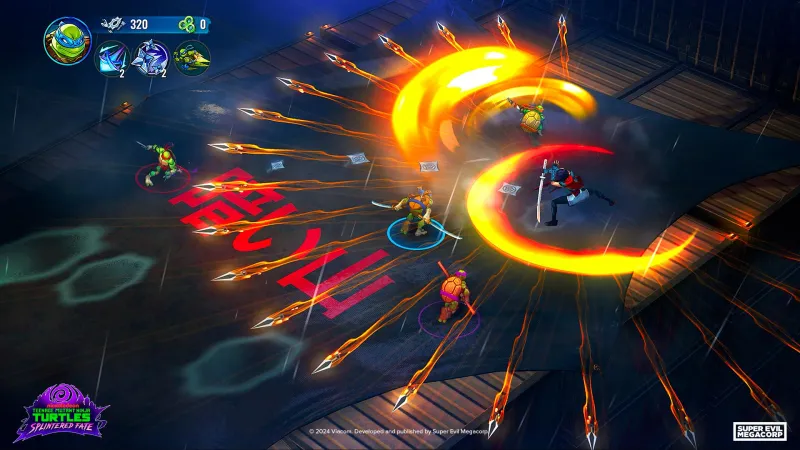
The core gameplay revolves around choosing one of the four iconic brothers, each featuring distinct combos, special attacks, and unique tools. Leonardo offers balanced range and special charge capabilities, while Donatello provides superior reach despite stiffer movement. Michelangelo excels with sweeping nunchuck strikes, and Raphael stands out with a grappling hook that pulls enemies into range for high-critical damage. Players are encouraged to experiment with these playstyles, as every failed run returns you to the Turtles’ lair to prepare for the next attempt.
Combat, Strategy, and Repetition
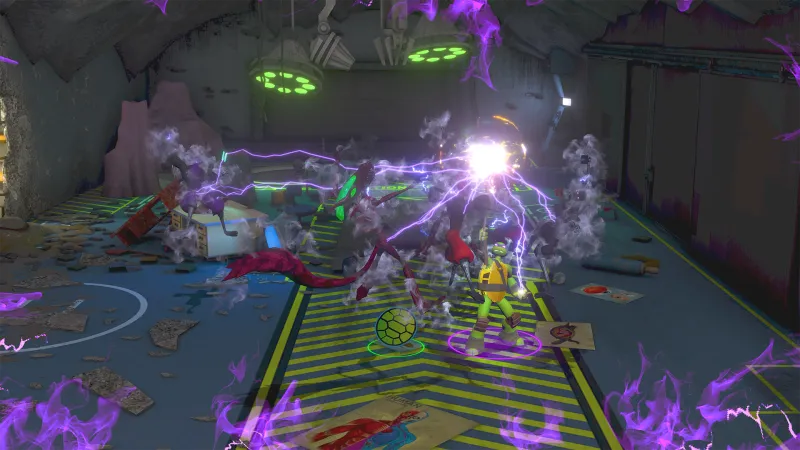
Each run challenges players to clear rooms filled with diverse threats, including Foot Clan ninjas, Mousers, and giant StockGen robots. Combat is fluid and responsive, requiring players to dash and weave through arenas while executing strategic combos. However, the roguelike loop eventually reveals a lack of variety. Despite the inclusion of boss variants—such as added elemental attacks or extra minion summons—the experience of facing the same encounters repeatedly can become tiresome. Even the addition of local and online co-op, which allows for creative ability synergy, does not fully mask the structural monotony.
The Progression Paradox
A hallmark of any successful roguelike is the sense of growth, and Splintered Fate excels by offering a robust system of permanent upgrades. Players feel a tangible improvement in their character’s strength and their own mechanical skills with every run. Unfortunately, this satisfying feedback loop is bogged down by an overly complex economy. Managing more than nine distinct currencies—ranging from temporary in-run Scrap to various boss-specific items—creates unnecessary confusion. When players must frequently consult help screens to understand how to obtain and spend resources, the upgrade system crosses the line from deep to cumbersome.
Verdict on the Turtles’ Latest Venture
Teenage Mutant Ninja Turtles: Splintered Fate successfully captures the high-energy spirit of the franchise’s most iconic beat-’em-ups while daring to try something new. While the game suffers from repetitive design and an over-engineered currency system, the core combat loop is sufficiently addictive to keep players coming back. Each defeat serves as a lesson, fueling the desire to jump back into the fray and test a new build against the Foot Clan once more.