
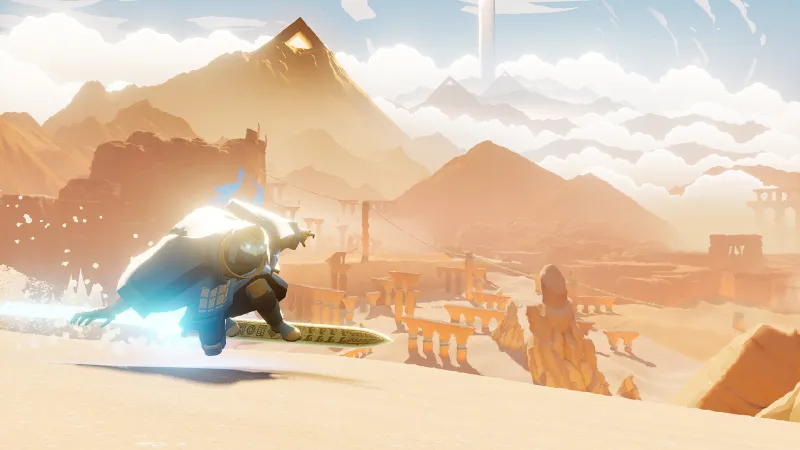
Giant Squid, the studio founded by Journey art director Matt Nava, delivers its most evocative experience yet with Sword of the Sea. Released as the studio’s third major title, the game serves as a spiritual successor to the 2012 landmark, blending a distinct, evolving art style with a breathtaking sense of momentum that defines the entire experience.
Mastering the Art of Hoverboard Combat
In Sword of the Sea, players step into the boots of a swordsperson who treats their blade less like a weapon and more like a high-speed hoverboard. The core objective is to restore aquatic life to a sprawling, arid world of rolling sand dunes. While scattered stone tablets provide cryptic narrative hints, the game prioritizes visual storytelling, allowing the environment to speak for itself.
The true highlight is the fluid, high-velocity movement. Navigating the dunes feels fast and intuitive, with new abilities unlocking throughout the journey to enhance your speed and traversal options. Mastering the rhythm of the terrain is consistently rewarding, ensuring the gameplay loop remains engaging from start to finish. With a brisk three-hour runtime, the game encourages immediate replayability via a “New Game Plus” mode, perfect for unlocking final abilities and revisiting the game’s exhilarating finale.
A Visual Spectacle in Motion
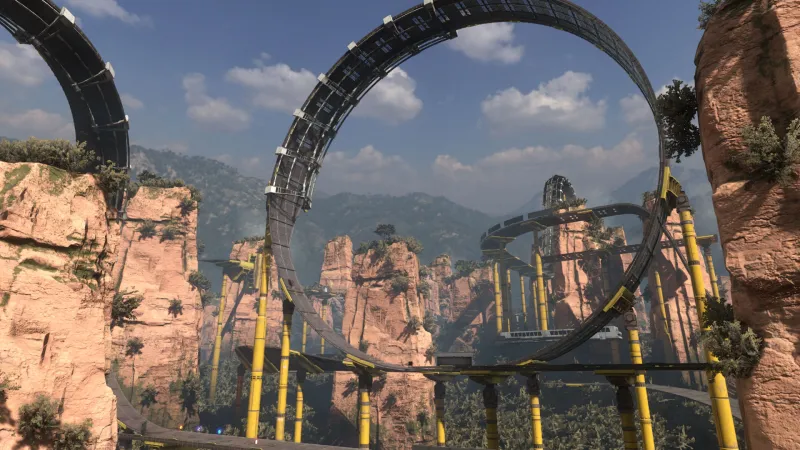
Beyond the mechanics, the game’s aesthetic is a triumph. The visuals are so striking that the game frequently takes control of the camera during high-speed descents to showcase the distant, sprawling landscape. These cinematic moments allow players to fully appreciate the art direction without the pressure of precise platforming. The ocean-themed motifs, combined with surreal, unexpected environmental shifts, ensure that the world of Sword of the Sea remains consistently surprising.
Navigating the Narrative Gaps
If there is a point of contention, it lies within the emotional weight of the story. While the game excels in atmosphere, it struggles to land the same profound emotional impact found in its predecessors. The abstract nature of the world and the lack of spoken dialogue create a disconnect, leaving the narrative implications feeling slightly thinner than the impeccable quality of the game’s visuals, sound design, and mechanical feel.
A Brief, Unforgettable Journey
Sword of the Sea thrives on its brevity and focus, never overstaying its welcome. It maintains a breakneck pace—reaching speeds of up to 170 miles per hour once you unlock the post-game speedometer—and demands your full attention at every second. While the story left a desire for more depth, the overall package is an elevated experience that sets a high bar for visual and kinetic design in modern gaming.