

India’s lower house has passed a contentious bill to prohibit real-money gaming, a move industry leaders warn could dismantle a $23 billion sector and push millions of users toward unregulated, offshore gambling platforms.
The Economic Fallout of a Blanket Ban
Industry bodies are sounding the alarm, stating, “By shutting down regulated and responsible Indian platforms, it will drive [millions] of players into the hands of illegal matka networks, offshore gambling websites, and fly-by-night operators who operate without any safeguards, consumer protections, or taxation.” (Matka is a form of illegal gambling that originated in India, involving betting on random numbers.)
The three primary industry associations estimate that real-money gaming startups in India hold a combined enterprise valuation of ₹2 trillion (approximately $23 billion). These companies generate ₹310 billion ($3.6 billion) in annual revenue and contribute ₹200 billion ($2.29 billion) in taxes. Projections suggested a 28% compound annual growth rate, potentially doubling the industry’s size by 2028. However, experts now warn the legislation could trigger the closure of over 400 companies and the loss of 200,000 jobs.
Representatives have since escalated their concerns, drafting a formal letter to Indian Home Minister Amit Shah. Sources familiar with the matter indicate that both domestic and global investors are currently re-evaluating their positions in the market.
Market Volatility and Corporate Impact
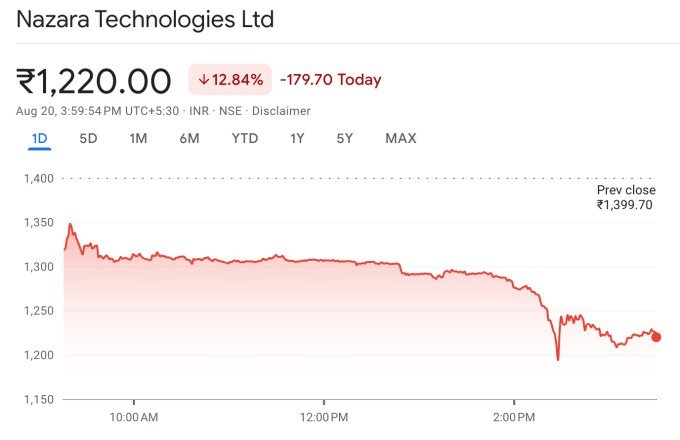
Publicly listed Nazara Technologies felt the immediate sting of the legislative uncertainty, with its share price plummeting 12.84% on Wednesday to close at ₹1,220 ($14). The firm moved to reassure shareholders via a stock exchange filing, clarifying that it holds “no direct exposure” to real-money gaming businesses.
While major players like Dream Sports and MPL declined to comment, the bill passed in the lower house via a voice vote in under seven minutes. It now awaits approval from the upper house and the president.
Divided Opinions on the Future of Gaming
Not all sectors are opposed to the ruling. Companies focused on casual gaming and esports have expressed relief. Sumit Batheja, CEO and co-founder of Ginger Games, noted, “We applaud this decision as it allows us to focus on the ongoing concerns as a business — monetization, retention, and most importantly, building great IP for India and the world.”
I welcome the Govt’s decision to prohibit Real Money Gaming & establish a strong regulatory framework. 🇮🇳
Too many young lives were being lost to addiction & debt.
This decisive step safeguards our youth while unlocking the future of Indian gaming — driven by original IP,…
— Vishal Gondal (@vishalgondal) August 20, 2025
However, concerns remain regarding the lack of legislative precision. Akshat Rathee, co-founder of NODWIN Gaming, emphasized the need for clear definitions to distinguish esports from gambling. Others, like policy experts, argue that the bill “decimates esports” by granting government authorities broad power to validate or invalidate legitimate competitive gaming events.
Regulatory Context and Investment Reputation
This legislation follows years of friction between the government and the gaming industry. In 2023, the government amended IT guidelines to curb user harm, but self-regulatory models failed to gain traction. The subsequent imposition of a 28% tax on online gaming—with reports suggesting a potential increase to 40%—has already strained investor confidence.
Rohit Kumar of The Quantum Hub highlighted that the broader issue is the lack of due process. “Regulation is necessary, but abrupt moves like this undermine India’s reputation as a stable, predictable investment destination,” he said.