
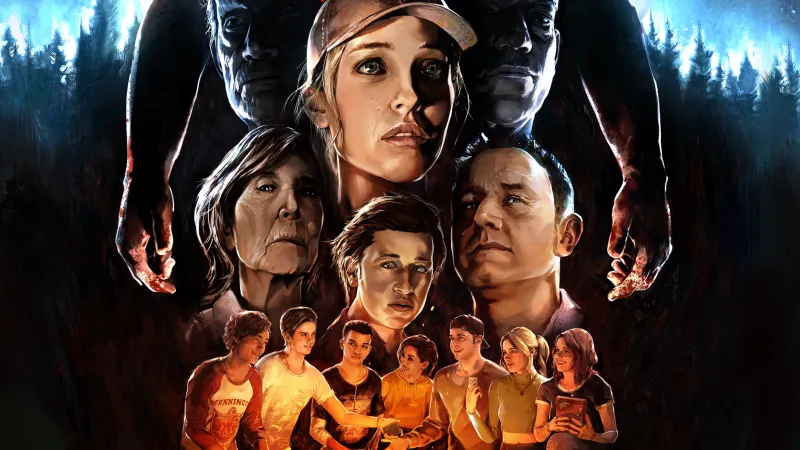
Supermassive Games has officially reclaimed its throne in the horror genre with The Quarry, a gripping spiritual successor to Until Dawn that turns player choice into a life-or-death web of 186 potential endings. After the narrative shortcomings of The Dark Pictures Anthology, this new title restores the studio’s reputation for high-stakes decision-making, offering a cinematic slasher experience that feels both fresh and terrifyingly familiar.
A Love Letter to Slasher Cinema
The story kicks off at Hackett’s Quarry, where the final day of summer camp turns into a nightmare. A broken-down van forces a group of teenage counselors to spend one last night together, setting the stage for a classic horror setup. Supermassive expertly uses this booze-fueled bonfire backdrop to build genuine connections, allowing players to define character personalities through meaningful input before the chaos truly begins.
Choices That Carry Weight
Conversations are consistently interrupted by binary choices—such as opting to be “assertive” or “apologetic”—which ripple through the narrative. These decisions dictate relationship strength and can lead to dramatic tonal shifts. While the game does an excellent job of signaling when you’ve altered the path, some choices remain frustratingly vague. You might find yourself opening a trap door or grabbing a bag with little context, only to realize too late that your decision just turned a character into a midnight snack.
The “Life” System Controversy
To mitigate the sting of sudden character deaths, the special edition introduces a “use a life” system that allows players to undo mistakes. However, this feature arguably undermines the game’s core tension. By providing three extra lives, the game softens the consequences of your actions. For the most authentic experience, I highly recommend playing the standard edition or ignoring the extra lives to ensure that your choices—and their permanent, often brutal, consequences—truly matter.
Cinematic Experience Over Interactive Gameplay
While the narrative depth is stellar, the mechanical gameplay takes a backseat. Quick Time Events (QTEs) are heavily telegraphed and surprisingly easy to complete, often slowing down the pacing during high-intensity sequences. Compared to Until Dawn, there are fewer moments involving active running, hiding, or environmental interaction. The Quarry is undeniably more of a cinematic experience than an interactive one, though the sheer volume of branching paths makes it highly replayable.
A Cast That Steals the Show
The strength of The Quarry lies in its ensemble cast. While veterans like David Arquette and Ted Raimi anchor the production, the younger actors—including Ariel Winter, Justice Smith, and Halston Sage—deliver standout performances. The art team deserves equal praise for bringing these characters to life with terrifying realism, capturing subtle emotional cues that often hint at a character’s true intent.
Logic Gaps and Horror Tropes
Admittedly, the plot features some logic gaps that require a bit of “turning off your brain” to fully enjoy. Characters occasionally ignore obvious threats or shrug off life-threatening wounds with a nonchalance typical of cheesy slasher flicks. Yet, these moments often add to the charm. You will find yourself yelling at the screen, laughing at the absurdity, and cheering for the survivors all at once.
Despite the lack of mechanical depth, the thrill of uncovering the dark mysteries of Hackett’s Quarry is an incredibly powerful hook. Whether you are playing through the main story or utilizing the hands-off Movie Mode, the constant suspense and the branching complexity ensure that The Quarry remains a must-play experience for horror fans until the final credits roll.