
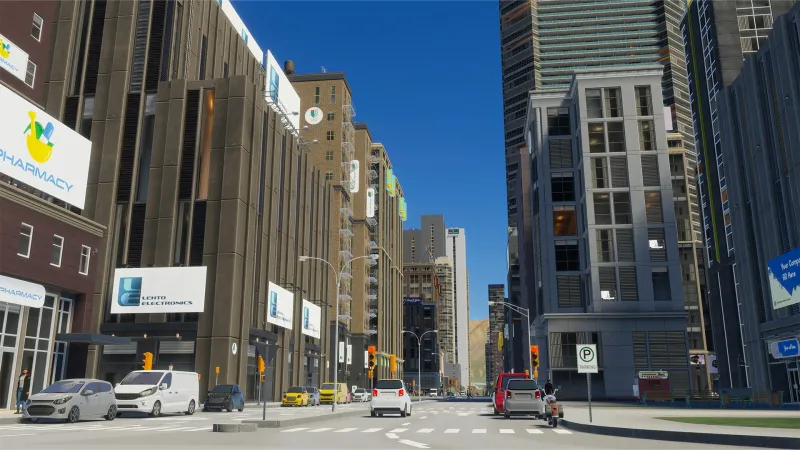
Colossal Order returns to the city-builder throne with Cities: Skylines II, a sprawling sequel that captures the intricate management of its 2015 predecessor while introducing significant technical hurdles. Players are once again tasked with balancing complex municipal systems, proving that despite some launch-day performance imperfections, the game offers a level of depth and customization rarely seen in the genre.
Building Your Urban Vision
In Cities: Skylines II, you create a whole world from terrarium beginnings. You start by zoning your districts, then adding functionality with electricity and plumbing before building serviceable districts to attract and placate dedicated citizens. I unintentionally recreated the town I grew up in, shoving all the industrial features to the side with the power and water facilities.
Progression and Infrastructure Mastery
Despite its sandbox impression, Cities: Skylines II has an engaging progression system, offering rewards as you scale from a tiny village into a bustling megalopolis. Each milestone achieved delivers Development Points you can use in infrastructure trees to unlock systems like police and parks, while expansion permits let you extend your city limits and access the resources you need to keep the lights on. Despite how mundane it sounds, unlocking and investing in underground parking and figuring out how it could help my citizens felt revelatory thanks to this guided approach.
The Social Dynamics of City Planning
As my city became more complex, it opened the door to signature buildings like factories or mansions and more contemporary concerns like pollution and congestion, emboldening me to find Arcadian solutions and give my citizens a better life. Even in success, the locals had plenty to say about it via the in-game Twitter clone Chirper. Just like real social media, there was a mountain of mean things to read about my supposedly terrible choices, with a few compliments smattered in between. How dare I try and use green energy to power the city; it’s far too loud now. It forces you to come to terms with the fact that not every digital person will enjoy your utopian vision.
Performance Hurdles and Visuals
The exponential growth of my cities took a toll on the game’s visuals and performance – Cities: Skylines II struggles to keep up with its own ambitious scale. Up close, there are moments of peculiar beauty, where sunlight streams through the gaps of a castle’s battlements, or you catch the shadow cast by your own terraformed mountain. However, from the typical top-down perspective, the world feels flat and somewhat cold, not helped by the systemic chugging, error messages, and frequent crashing, which scuppered pockets of my playtime. While I hope these issues will be resolved for players post-launch, it was disappointing and frustrating to contend with while fine-tuning my pipes, wires, and bus routes.
Connecting With Your Citizens
You can zoom in and get attached to the individuals living in your city, clicking on them to learn about their education, family, pets, and socioeconomic status. At one point, I considered demolishing a whole suburb before I spotted one of my uncanny valley citizens doing yoga in the backyard. After reading their factfile, I couldn’t bring myself to destroy their family home.
Managing Chaos and Calamity
If you miss too many citizen complaints, you’re alerted of major problems via booming emergency warnings that disrupt Cities: Skylines II’s calming Brian Eno-esque soundtrack, which is punctuated by appropriately annoying fictional ads. Environmental tragedies constitute hard urban planning lessons, and you’re able to manage traffic control, bunkers, and firefighters to mitigate damage. The first time I witnessed a tornado, it skirted my city’s edges, and I held my breath, praying it wouldn’t reach the center, promptly investing in better protection after the fact.
A Vision Mired by Technical Debt
Quantifying the nuance of Cities: Skylines II isn’t easy. As I dig deeper into its complicated systems, more and more exciting features are still coming into focus. The sequel is ambitious and wants players to juggle hundreds of considerations as they build towards Elysium, and it delivers in that aspect. Yet, unfortunately, the game’s consistent technical problems tend to mire that calculated success.